Vitamin D and Testosterone: How the Sunshine Vitamin Works
| What it is | Vitamin D is a fat-soluble secosteroid that acts more like a hormone than a classic vitamin. |
| The testosterone link | Vitamin D receptors sit in the testes; correcting a deficiency supports normal testosterone, though topping up a sufficient man does not add more. |
| Target level | A blood 25(OH)D of at least 30 ng/mL (75 nmol/L) is generally considered sufficient — test to know yours. |
| On a label | Choose D3 (cholecalciferol); 1000–2000 IU is a common maintenance dose, taken with a fatty meal. |
Of all the nutrients tied to men’s hormones, none is as widely studied — or as widely misunderstood — as vitamin D. The relationship between vitamin D and testosterone is real, but it is not the “take more, get more” story the supplement aisle implies. This guide explains the actual mechanism: why vitamin D behaves like a hormone, how vitamin D receptors in the testes fit into testosterone production, what the research really shows about the question does vitamin D increase testosterone, and how to read a label so you supplement sensibly.
This is general wellness information, not medical advice, and vitamin D is not a treatment for low testosterone or any condition. The aim here is understanding, so you can make an informed choice and a good conversation with your doctor.
Why vitamin D is really a hormone
Vitamin D earned its “vitamin” label before scientists understood it, and the name has caused confusion ever since. A true vitamin is something you must eat because your body cannot make it. Vitamin D is different: your skin manufactures it from cholesterol when UVB sunlight hits it. That is why it is called the sunshine vitamin — and why it is more accurately a secosteroid hormone.
Getting to its active form takes two steps. The liver converts skin-made or dietary vitamin D into 25-hydroxyvitamin D, or 25(OH)D — the stable storage form your blood test measures. The kidneys then convert that into 1,25-dihydroxyvitamin D (calcitriol), the active hormone. Calcitriol travels the body and switches genes on and off by binding a protein called the vitamin D receptor (VDR). Because it is produced in one place and acts on receptors elsewhere, it fits the definition of a hormone far better than that of a vitamin.
Vitamin D and testosterone: the receptor connection
Here is where men’s health enters the picture. Vitamin D receptors and the enzymes that activate vitamin D have been found in the tissues that make and manage testosterone — including the Leydig cells of the testes, where testosterone is produced, and even on sperm cells. That biological presence is the plausible link, and the evidence lines up in a specific pattern:
- Observational studies repeatedly find that men with healthy vitamin D levels tend to have higher testosterone than men who are deficient, with a seasonal rhythm that tracks sunlight.
- Correction trials — giving vitamin D to men who are genuinely deficient — are the most encouraging, suggesting that restoring a normal level supports normal testosterone.
- Repletion in sufficient men is where the story ends: adding more vitamin D to someone who already has enough does not appear to push testosterone higher.
The honest summary is that vitamin D permits normal function rather than boosting it. Fixing a shortfall can help; overshooting cannot. That makes vitamin D less like a booster and more like the minerals we cover in zinc and testosterone and boron and testosterone — essential inputs where the benefit is in avoiding a deficit, not in piling on excess.
How common is a shortfall?
More common than most men assume. Indoor work, higher latitudes, darker winters, sunscreen, and more melanin in the skin all reduce how much vitamin D you make. Because few foods carry meaningful amounts — fatty fish, egg yolks and fortified dairy are the main ones — diet rarely closes the gap. The result is that a large share of men run below the sufficiency threshold, especially in winter, often without any obvious symptoms. That is precisely why the answer to does vitamin D increase testosterone depends entirely on where you started: the men most likely to benefit are the ones who did not realise they were low.
Prefer to cover your vitality bases with a clean, once-daily botanical blend?
See GaraHerb PackagesThe number that matters: your 25(OH)D level
Because the benefit is about correcting a deficiency, the single most useful thing you can do is test. A simple blood test measures 25-hydroxyvitamin D. Most laboratories treat a result of at least 30 ng/mL (75 nmol/L) as sufficient, with deficiency defined below about 20 ng/mL. Testing before you start and again a couple of months later tells you whether your dose is actually moving the number — far more informative than picking an IU figure and hoping. If you are already comfortably in range, more vitamin D is unlikely to do anything for your testosterone.
Dosing context and how to read a label
- Choose D3. Supplements come as D2 (ergocalciferol) or D3 (cholecalciferol, the form your skin makes). D3 is generally more effective at raising and holding blood levels.
- Sensible amounts. The RDA is 600–800 IU/day; many adults use 1000–2000 IU for maintenance. Around 4000 IU is widely cited as the safe upper limit without medical supervision, because vitamin D is fat-soluble and can accumulate.
- Take it with fat. Absorption improves with a meal containing some fat — it is fat-soluble, after all.
- Mind the cofactors. Magnesium is required to metabolise vitamin D, and many products pair D3 with vitamin K2. A shortfall in magnesium can blunt what vitamin D does.
Simple safety
Vitamin D is safe for most adults at sensible doses, but it is not harmless in excess. Because it is fat-soluble, very high intakes over time can build up and, in rare cases, raise blood calcium to problematic levels. This is not a nutrient to megadose “just in case.” If you take medication, have kidney issues or a condition affecting calcium, or are considering a high dose, let a blood test and your doctor guide you rather than guesswork. Used the way it is meant to be — to correct a shortfall and hold a healthy level — vitamin D is one of the most sensible additions a man can make.
One capsule a day, gluten-free and vegetarian, with a 60-day money-back guarantee.
Get GaraHerb Today
Vitamin D in the bigger picture
The lesson of vitamin D is a useful one for the whole supplement world: many nutrients are not accelerators but permissions. Your body has a job to do — in this case, making and managing testosterone — and it needs certain raw materials and signals to do it well. When one of those is missing, restoring it lets normal function resume, which can feel like a boost. When nothing is missing, adding more does nothing, because there was no bottleneck to clear.
That is why vitamin D belongs in a foundations-first approach rather than a chase for the next big booster. Get sunlight where you sensibly can, eat the foods that carry it, test your level, and supplement to fill the gap if there is one. Then let the botanicals and minerals in a thoughtful men’s routine handle the other pieces of the puzzle. For the full framework, see our guide on how to support male vitality naturally.
Vitamin D sits upstream of testosterone production. For the downstream side of the same pathway — how testosterone converts to DHT and why that matters for the prostate — read saw palmetto benefits for men.
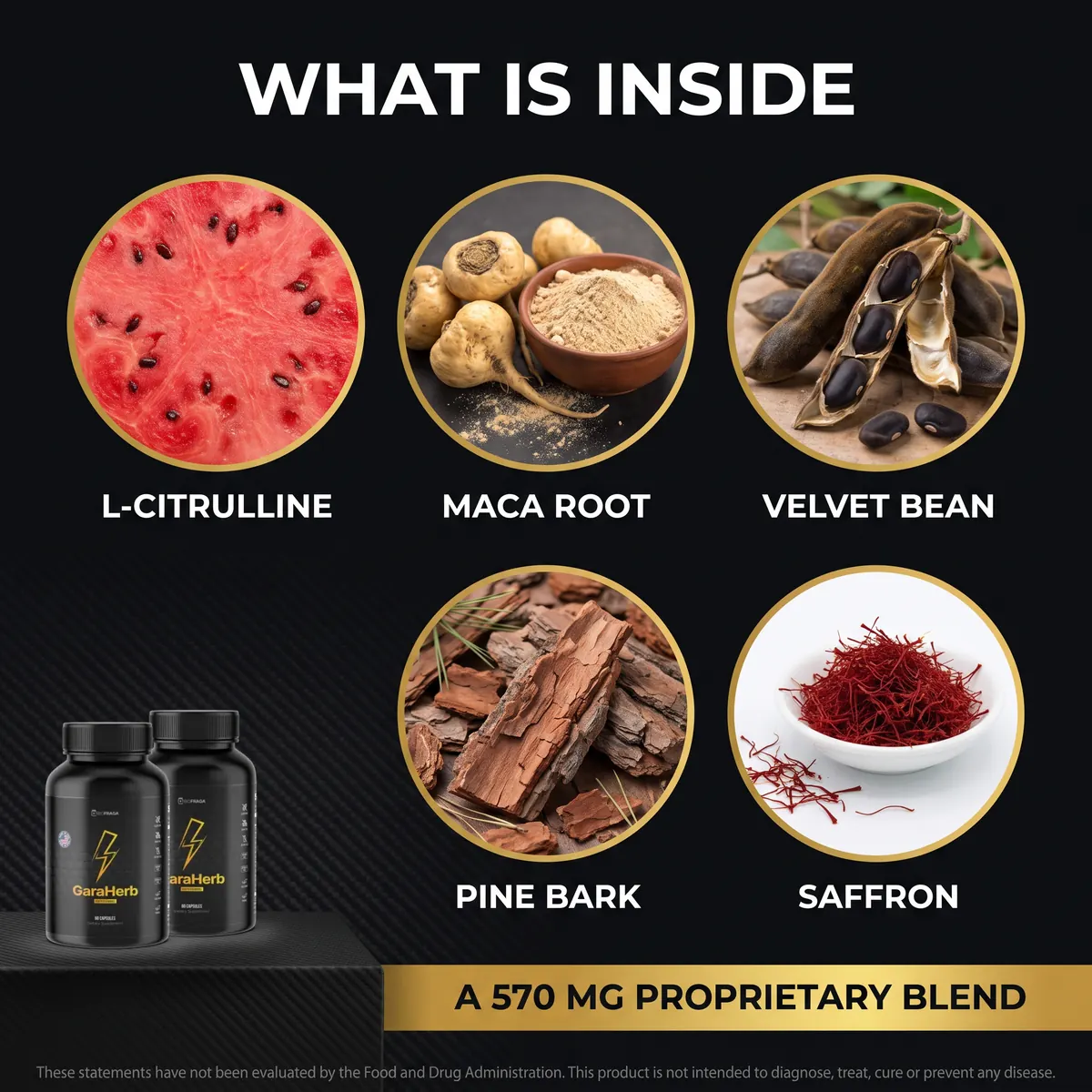
A note on our own product: Vitamin D is not an ingredient in GaraHerb. This guide is general ingredient education. The GaraHerb Supplement Facts panel lists Vitamin B3, Zinc and a 570 mg blend of L-Citrulline, L-Carnitine, Pine bark, Velvet bean, Maca root, Grape skin and Saffron — you can read the full panel on the GaraHerb ingredients page.
Keep reading
- Zinc and testosterone: how the mineral supports men
- Magnesium benefits for men: testosterone, sleep and muscle
- Boron and testosterone: how the trace mineral works
- See the full GaraHerb formula and ingredient panel →
Frequently asked questions
Does vitamin D increase testosterone?
The strongest signal is for correction, not boosting. Men who are deficient in vitamin D and then reach a healthy level often see testosterone support, while topping up someone who is already sufficient does not appear to add more. Vitamin D is best thought of as fixing a shortfall rather than pushing testosterone above normal.
Why does vitamin D act like a hormone?
Your body makes vitamin D in the skin from sunlight and converts it into an active form that binds vitamin D receptors throughout the body, including in the testes. Because it is made in one place and acts on receptors elsewhere, it behaves like a steroid hormone rather than a classic dietary vitamin.
What vitamin D level should men aim for?
Most labs consider a blood 25-hydroxyvitamin D level of at least 30 ng/mL (75 nmol/L) to be sufficient. The only way to know your number is a blood test, which is why testing before and after supplementing is more useful than guessing at a dose.
How much vitamin D should a man take?
The RDA is 600 to 800 IU per day, and many adults use 1000 to 2000 IU for maintenance. 4000 IU is generally regarded as the safe upper limit without medical supervision. Because it is fat-soluble it can accumulate, so higher doses should be guided by blood testing and a doctor.
Is D3 better than D2?
For raising and maintaining blood levels, D3 (cholecalciferol, the form your skin makes) is generally more effective than D2 (ergocalciferol). Take it with a meal containing some fat for better absorption, and consider pairing it with magnesium, a cofactor in vitamin D metabolism.
References
- National Institutes of Health, Office of Dietary Supplements. “Vitamin D — Health Professional Fact Sheet.” ods.od.nih.gov
- Examine.com. “Vitamin D: evidence-based analysis.” examine.com
- MedlinePlus, U.S. National Library of Medicine. “Vitamin D.” medlineplus.gov
- National Center for Complementary and Integrative Health. “Vitamin D.” nccih.nih.gov
The GaraHerb Research Team is an independent group of men’s-health writers and supplement editors who turn ingredient science and label-reading know-how into plain English. We are not your doctor and we do not sell medical advice — our job is to help you understand how each active works so you can shop and supplement with confidence. Every guide is checked against primary sources such as the NIH Office of Dietary Supplements and peer-reviewed research, and reviewed for accuracy before publishing.
Spotted something that needs correcting? Reach us through our contact page, or read more about who we are.
† These statements have not been evaluated by the Food and Drug Administration. This product is not intended to diagnose, treat, cure or prevent any disease. This article is for general information only and is not medical advice. Speak with your physician before starting any new supplement.