Saw Palmetto Benefits for Men: How It Works on DHT and the Prostate
| What it is | Saw palmetto (Serenoa repens) is the berry of an American dwarf palm, rich in fatty acids and plant sterols. |
| How it works | Its liposterolic compounds are thought to gently inhibit 5-alpha-reductase, the enzyme that turns testosterone into DHT. |
| Traditional use | Supporting normal prostate function and comfortable urinary flow in aging men — evidence is mixed and it is not a treatment. |
| On a label | Look for a liposterolic extract standardized to 85–95% fatty acids; the studied dose is 320 mg/day. |
Saw palmetto is the most recognisable name in men’s prostate support, and one of the oldest botanicals in the men’s-health cabinet. The saw palmetto benefits for men centre on a single, elegant idea: influencing the hormone DHT. But the story is more nuanced than most bottles admit, and honesty about the evidence matters here more than usual. This guide explains the mechanism — how saw palmetto interacts with the enzyme 5-alpha-reductase — what the prostate research really shows, the dose studies use, and how to read a standardized label.
Important context up front: this is general wellness information, not medical advice. Saw palmetto is not a treatment or cure for any prostate condition, and prostate or urinary symptoms always deserve a proper medical assessment rather than self-treatment.
What is saw palmetto?
Saw palmetto is a hardy dwarf palm (Serenoa repens) native to the southeastern United States, especially Florida. Native peoples used its dark berries as food and traditional medicine long before it became a supplement staple. The active material is not the whole berry so much as its oily fraction: a liposterolic extract rich in free fatty acids and phytosterols, most notably beta-sitosterol. Those fat-soluble compounds are what modern products concentrate and standardize, and they are the reason the extract, not the dried berry, is what the research uses.
Saw palmetto, DHT and 5-alpha-reductase
To understand saw palmetto you need to understand one hormone conversion. Testosterone can be converted into a more potent androgen called dihydrotestosterone (DHT) by an enzyme named 5-alpha-reductase. DHT is important during development, but in adult men elevated DHT activity in certain tissues is linked with two things men care about: growth of the prostate, and the miniaturisation of scalp hair follicles associated with male-pattern hair thinning.
Saw palmetto’s liposterolic compounds are thought to gently inhibit 5-alpha-reductase, providing a mild, natural brake on that testosterone-to-DHT conversion. Some research also suggests it may have anti-inflammatory effects in prostate tissue and may interfere with DHT binding to its receptor. Crucially, this is a soft, botanical-strength effect — not the powerful pharmaceutical inhibition of prescription drugs, and not something that dramatically alters your total testosterone. It is the same enzyme family that tongkat ali and fenugreek are studied around, approached from the DHT side.
What the prostate evidence really shows
Here is where responsible writing parts ways with marketing. Saw palmetto has been used traditionally for generations to support comfortable urinary flow and normal prostate function in aging men, and some earlier studies were encouraging. However, several large, well-designed clinical trials — including high-dose, long-duration studies — found saw palmetto no better than placebo for the urinary symptoms of an enlarged prostate. Reviews of the overall evidence describe it as, at best, mixed.
The fair conclusion is that saw palmetto is best viewed as gentle, traditional support that some men find helpful, rather than a proven remedy. That is not a knock on the botanical — it is simply the honest state of the science, and it is exactly why any man noticing prostate or urinary changes should see a doctor rather than reaching for a supplement. Saw palmetto complements medical care and healthy habits; it does not replace them.
Prefer a clean, once-daily botanical blend built for everyday male vitality?
See GaraHerb PackagesDosing context: what the research uses
For general education, the most studied regimen is 320 mg per day of a liposterolic extract standardized to roughly 85–95% fatty acids, frequently split as 160 mg twice daily. That standardization is the whole game: un-standardized dried berry or a weak powder contains far less of the fat-soluble actives, so a big milligram number on a cheap product can still deliver very little. As with most botanicals, effects (if you notice them) build over weeks to months of consistent use, and saw palmetto is best judged over a season rather than a week.
What to look for on a label
- Liposterolic and standardized. The gold standard is an extract described as liposterolic (sometimes abbreviated LSESr) and standardized to 85–95% fatty acids and sterols. This is the single most important line.
- Extraction method. Supercritical CO2 extraction is a clean way to capture the fatty fraction; many quality products mention it.
- A stated amount. Look for the extract weight. In a proprietary blend the total blend weight is shown instead, so you are trusting the formulator’s ratios.
- Clean manufacturing. Choose products made in an FDA-registered, GMP-certified facility.
Simple safety — and one thing to tell your doctor
For healthy adult men, saw palmetto is generally well tolerated, with occasional mild digestive upset the most common complaint. Two cautions are worth highlighting. First, it may thin the blood slightly, so avoid it before surgery and be careful if you take anticoagulants. Second, and importantly, saw palmetto can influence the results of a PSA blood test used in prostate screening — so always tell your doctor you take it before any prostate check, so your results are interpreted correctly. Saw palmetto is intended for men, not for women or during pregnancy.
One capsule a day, gluten-free and vegetarian, with a 60-day money-back guarantee.
Get GaraHerb Today
Saw palmetto in the bigger picture
Saw palmetto is a useful case study in how to think about any men’s botanical. It has a clear, plausible mechanism (a mild brake on 5-alpha-reductase and DHT), a long tradition of use, and a body of modern evidence that is honestly mixed. The mature way to hold all three at once is this: it may offer gentle support, especially as part of a broader routine, but it is not a magic bullet and it is no substitute for medical care when real symptoms appear.
That framing keeps saw palmetto in its proper place — one supporting botanical among several, working best alongside the fundamentals of sleep, movement, a whole-food diet and the essential minerals. To see how the androgen and circulation pieces fit together, read our guides on pine bark extract for circulation and shilajit benefits for men, then see the complete formula on the GaraHerb homepage.
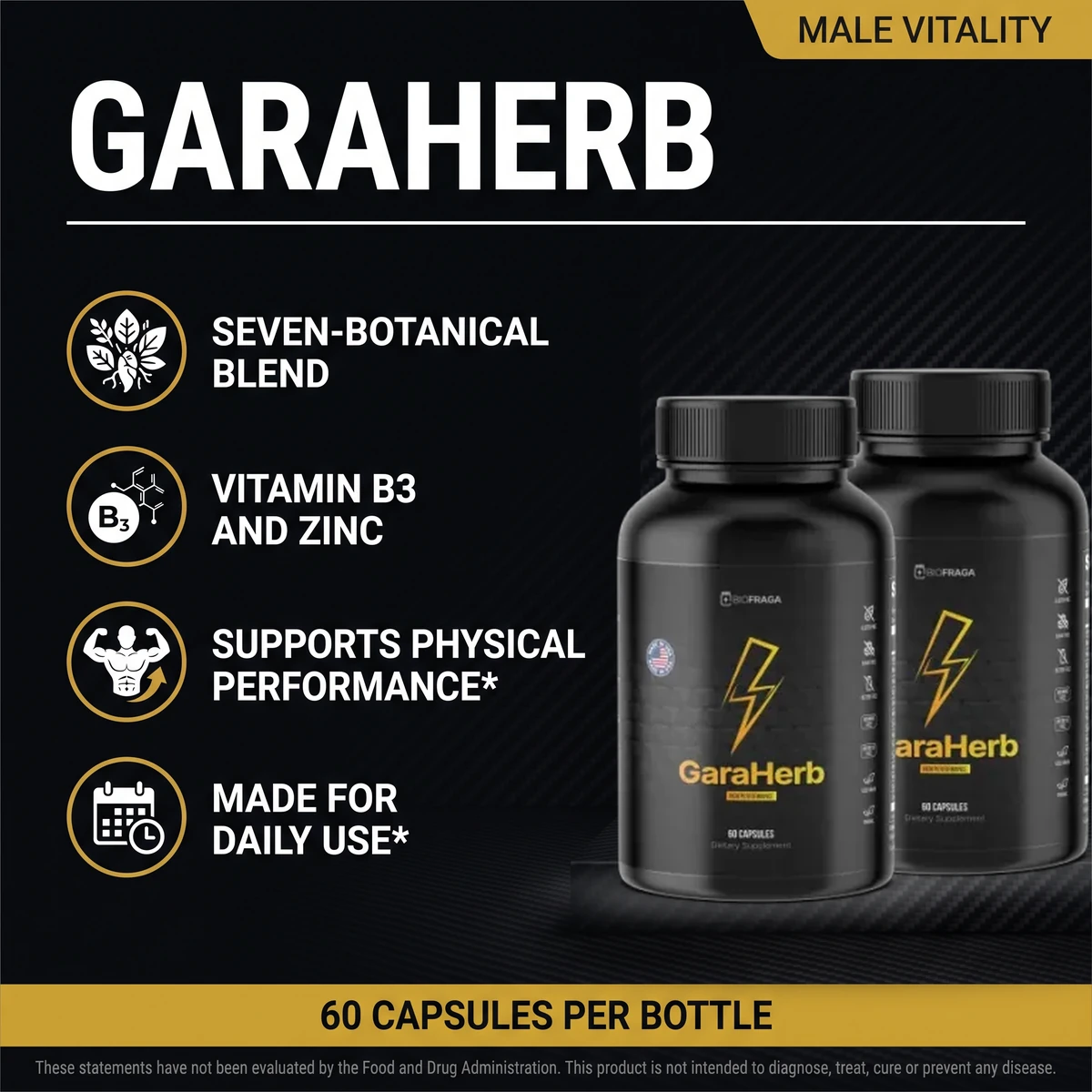
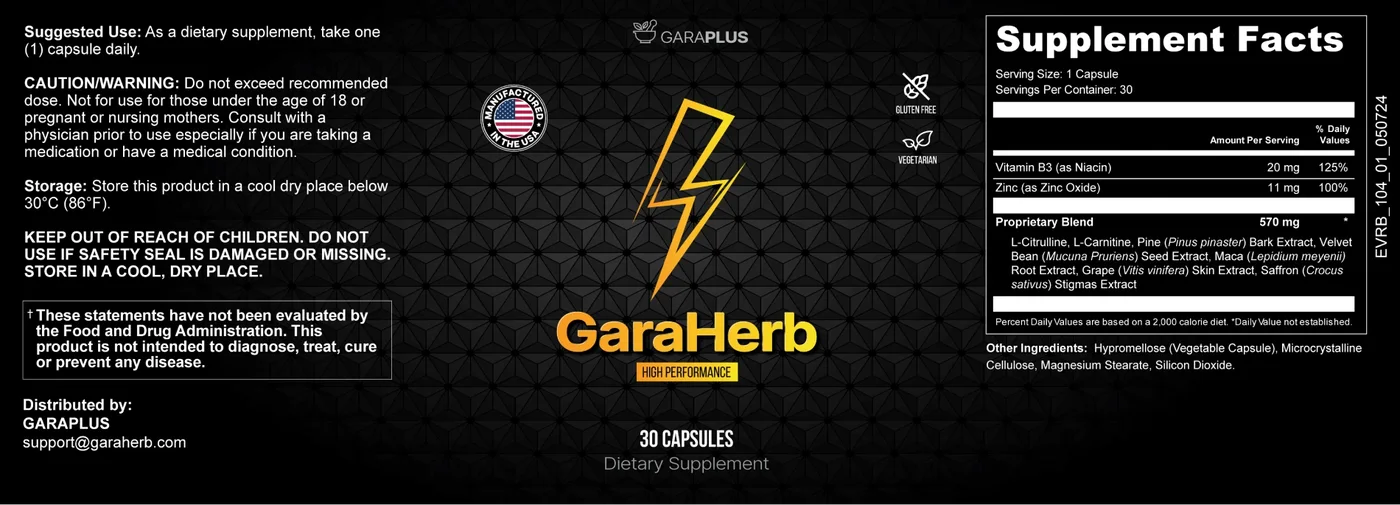
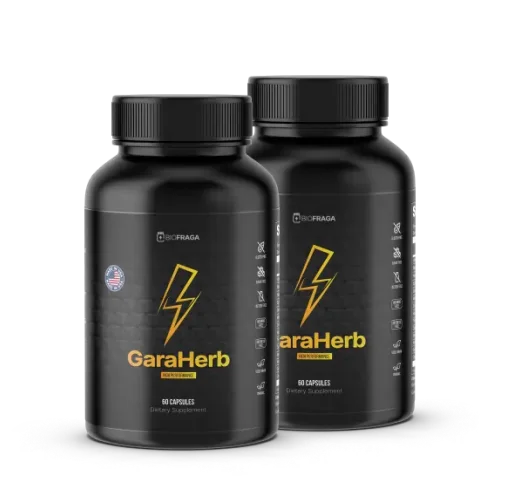
A note on our own product: Saw palmetto is not an ingredient in GaraHerb. This guide is general ingredient education. The GaraHerb Supplement Facts panel lists Vitamin B3, Zinc and a 570 mg blend of L-Citrulline, L-Carnitine, Pine bark, Velvet bean, Maca root, Grape skin and Saffron — you can read the full panel on the GaraHerb ingredients page.
Keep reading
- How does tongkat ali work for testosterone?
- Shilajit benefits for men: fulvic acid, energy and vitality
- Boron and testosterone: how the trace mineral works
- See the full GaraHerb formula and ingredient panel →
Frequently asked questions
What are the main saw palmetto benefits for men?
Saw palmetto is traditionally used to support normal prostate function and comfortable urinary flow in aging men, and it is popular for its possible effect on DHT. It is a botanical used for general wellness support and is not a treatment, cure or replacement for medical care for any prostate condition.
How does saw palmetto affect DHT?
Saw palmetto’s fatty acids and sterols are thought to gently inhibit 5-alpha-reductase, the enzyme that converts testosterone into the stronger androgen DHT. DHT drives prostate growth and is linked with hair-follicle shrinkage, so a mild, natural brake on that conversion is the mechanism people are interested in.
Does saw palmetto really work for the prostate?
The evidence is genuinely mixed. Some studies and long traditional use suggest support for urinary comfort, while several large, well-run trials found saw palmetto no better than placebo for benign prostate symptoms. It should be seen as gentle traditional support, not a proven treatment, and prostate symptoms always warrant a doctor’s assessment.
How much saw palmetto do studies use?
The most studied dose is 320 mg per day of a liposterolic extract standardized to about 85 to 95 percent fatty acids, often split as 160 mg twice daily. Un-standardized dried berry provides far less active material, so standardization matters more than the raw milligram number.
Is saw palmetto safe to take?
For healthy adult men it is generally well tolerated, with occasional mild digestive upset. It may thin the blood slightly and can influence a PSA blood test, so tell your doctor you take it before any prostate screening, and avoid it before surgery or if you take anticoagulants. It is not intended for women or during pregnancy.
References
- National Center for Complementary and Integrative Health. “Saw Palmetto.” nccih.nih.gov
- Examine.com. “Saw Palmetto: evidence-based analysis.” examine.com
- MedlinePlus, U.S. National Library of Medicine. “Saw palmetto.” medlineplus.gov
- National Institutes of Health, Office of Dietary Supplements. “Botanical Dietary Supplements.” ods.od.nih.gov
The GaraHerb Research Team is an independent group of men’s-health writers and supplement editors who turn ingredient science and label-reading know-how into plain English. We are not your doctor and we do not sell medical advice — our job is to help you understand how each active works so you can shop and supplement with confidence. Every guide is checked against primary sources such as the NIH Office of Dietary Supplements and peer-reviewed research, and reviewed for accuracy before publishing.
Spotted something that needs correcting? Reach us through our contact page, or read more about who we are.
† These statements have not been evaluated by the Food and Drug Administration. This product is not intended to diagnose, treat, cure or prevent any disease. This article is for general information only and is not medical advice. Speak with your physician before starting any new supplement.