Shilajit Benefits for Men: How Fulvic Acid and Minerals Work
| What it is | A sticky, mineral-rich resin that seeps from Himalayan and other high-mountain rock — used in traditional Ayurveda for stamina and vitality. |
| The actives | Fulvic acid and dibenzo-α-pyrones (DBPs), plus a spread of trace minerals; fulvic acid is the marker used to grade quality. |
| The evidence | Studied for cellular energy, exercise recovery and maintaining normal testosterone in healthy men — a wellness botanical, not a treatment. |
| On a label | Look for purified shilajit, a stated fulvic-acid percentage, and third-party heavy-metal testing. |
Ask about the oldest ingredients still used for men’s vitality and shilajit is near the top of the list. This dark, tar-like resin has been prized in Ayurvedic tradition for centuries, and interest in the modern shilajit benefits for men has surged as purified, lab-tested versions have reached the shelf. But the internet is thick with hype, so this guide sticks to what shilajit actually is, how its two headline compounds — fulvic acid and dibenzo-α-pyrones — are thought to work, what the research does and does not show, and how to read a label so you buy a genuine, safe product rather than a contaminated one. It is general information, not medical advice.
What is shilajit?
Shilajit (sometimes spelled shilajeet, and also called mumijo or mineral pitch) is a blackish-brown, sticky substance that oozes from cracks in rock in high-altitude ranges — most famously the Himalayas, but also the Altai, Caucasus and Andes. It is not a plant and not a simple mineral. It forms over centuries as layers of plant and microbial matter are slowly compressed and transformed by heat, pressure and microorganisms, leaving behind a humus-rich resin packed with organic acids and minerals.
That origin is the whole story of both its promise and its risk. Because it is scraped straight from rock, raw shilajit can carry heavy metals, free radicals, fungi and other contaminants. Reputable products are therefore purified — filtered and processed to remove those impurities and concentrate the useful compounds — and then tested. Raw, unpurified “straight from the mountain” shilajit is exactly what you do not want.
The active compounds behind shilajit benefits for men
When researchers analyse quality shilajit, a few components come up again and again, and they explain most of the proposed shilajit benefits for men:
- Fulvic acid. A small, carbon-rich molecule formed as organic matter decomposes. It is the marker compound used to standardize and grade shilajit, it behaves as an antioxidant, and it is thought to help ferry minerals and other molecules across cell membranes — a sort of natural carrier.
- Dibenzo-α-pyrones (DBPs) and DBP-chromoproteins. These are the resin’s signature bioactives, studied as antioxidants and for a role in the mitochondria — the tiny power plants inside your cells.
- Humic substances. The broader family fulvic acid belongs to, contributing to the antioxidant character of the resin.
- Trace minerals. Shilajit naturally contains dozens of minerals in small amounts, and fulvic acid is believed to improve how well the body can use them.
How shilajit works: the mechanism
There is no single switch that shilajit flips. Instead, the proposed mechanism is a handful of overlapping effects that together support the body’s own everyday function:
- Mitochondrial support and energy. The most cited idea is that shilajit’s DBPs help the mitochondria convert nutrients into usable energy (ATP) more efficiently and support the coenzyme Q10 pathway. In practical terms this is framed as supporting stamina and reducing the sense of fatigue — not as a stimulant like caffeine.
- Antioxidant activity. Fulvic acid and the DBPs mop up free radicals, which is relevant because oxidative stress is part of what wears cells down over time. Protecting the cellular machinery is a recurring theme in shilajit research.
- Mineral delivery. As a natural carrier, fulvic acid is thought to help the body absorb and use trace minerals, which is one reason shilajit is sometimes described as more than the sum of its individual minerals.
- Supporting normal testosterone. In a small controlled trial, purified shilajit helped maintain testosterone within the normal range in healthy middle-aged men — a supportive, maintenance role rather than a push above normal.
The honest summary: shilajit is a supportive, cumulative botanical whose effects are subtle and build with consistent use. It is a nutritional companion, not a fast-acting drug, and it should be discussed as supporting normal function.
Shilajit and testosterone
The shilajit and testosterone question is the reason many men look it up in the first place, so it is worth being precise. The most-quoted evidence is a 90-day, placebo-controlled study in healthy volunteers aged 45 to 55 who took purified shilajit twice daily. The men taking shilajit maintained higher levels of total and free testosterone than those on placebo, along with some markers of sperm quality in separate work.
Two caveats keep this in perspective. First, the study was small and in a specific age group, so it is a signal rather than the last word. Second, and more importantly, “maintaining normal testosterone” is not the same as pushing a healthy young man’s levels sky-high. Like zinc and testosterone and the trace mineral boron, shilajit is best understood as helping the body keep its own production in a healthy range — useful support, not a shortcut, and not a substitute for seeing a doctor if you suspect a genuine deficiency.
Prefer a once-daily blend that pairs mineral and botanical actives for everyday vitality?
See GaraHerb Packages
Shilajit, energy and stamina
Beyond testosterone, the everyday reason people reach for shilajit is energy. Because the proposed mechanism runs through the mitochondria rather than the nervous system, the promised effect is described as steadier stamina and better resistance to fatigue — a different feel from a stimulant jolt. Small studies have looked at shilajit alongside exercise, examining muscle strength and markers of recovery, with early and mixed but broadly encouraging results.
This is also why shilajit pairs logically with other energy-and-circulation actives in a men’s formula. It sits comfortably next to adaptogens and circulation supports; if that broader picture interests you, our guide to how to support male vitality naturally covers the sleep, movement and nutrition fundamentals that any single ingredient is only ever adding to.
How much shilajit do men take?
Because shilajit is a botanical and not an essential nutrient, there is no Recommended Dietary Allowance or Daily Value. Studies on purified shilajit have most often used 250 mg to 500 mg per day, and reputable products are dosed in that neighbourhood. The sensible rule is simple: follow the dose printed on a purified, tested product and do not exceed it. More is not better, and with a resin scraped from rock, the quality of the source matters far more than the size of the scoop.
Shilajit is usually taken once daily, dissolved in water or a warm drink if it is a resin, or as a capsule. Its effects are subtle and cumulative, so most people give it a steady run of several weeks and judge it over time rather than expecting an overnight difference.
What to look for on a label
With shilajit, label-reading is not optional — it is how you separate a genuine, safe product from a contaminated one. Check for:
- “Purified” shilajit, not raw or crude. Purification is what removes heavy metals and other contaminants.
- A stated fulvic-acid percentage. This is the quality marker; a genuine, concentrated resin will declare it. Vague products that hide it are a red flag.
- Third-party heavy-metal testing. Because the raw material can carry lead, arsenic or mercury, independent testing (and a willingness to share results) is essential.
- A clear amount per serving, ideally in the studied 250–500 mg range, so you know what you are actually getting.
- Clean manufacturing in an FDA-registered, GMP-certified facility, and sensible companions — shilajit sits naturally alongside minerals and vitality botanicals in a men’s blend.
Simple safety notes
Purified, lab-tested shilajit is generally well tolerated by healthy adults at labelled doses. The real safety issue is quality: unpurified shilajit can contain heavy metals, fungi and free radicals, which is exactly why purification and testing matter. A few practical cautions:
- Because shilajit contains iron and can influence iron status, men with haemochromatosis (iron overload) or high iron should avoid it unless a doctor advises otherwise.
- It may raise uric acid in susceptible people, so those with gout should be cautious.
- As with any supplement, if you take medication, have a medical condition, or are unsure, check with your doctor first. Shilajit is not intended to diagnose, treat, cure or prevent any disease.
One capsule a day, clean ingredients, backed by a money-back guarantee.
Get GaraHerb Today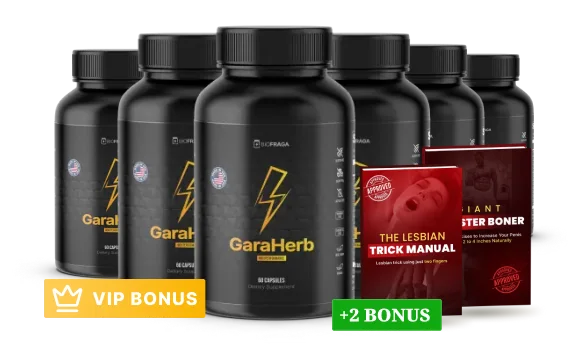
Shilajit in the bigger picture
Testosterone and energy get the headlines, but the more useful way to think about shilajit is as a mineral-and-antioxidant support that works quietly in the background. Its fulvic acid acts as a carrier and free-radical scavenger, its DBPs are studied for the mitochondria, and its trace minerals round out a diet that may already be short in a few of them. None of that is dramatic on its own — and that is the point. Shilajit is a supportive layer, not a magic bullet.
That is also why it belongs in a broader blend rather than being taken as a lone miracle powder. Minerals like magnesium and zinc, circulation actives, adaptogens and shilajit all pull in the same direction: helping the body do what it already does, a little better. The smartest approach is food-first and habit-first — sleep, training, protein and stress management — with a well-formulated, purified supplement filling the gaps. Buy the quality, respect the dose, and give it time.
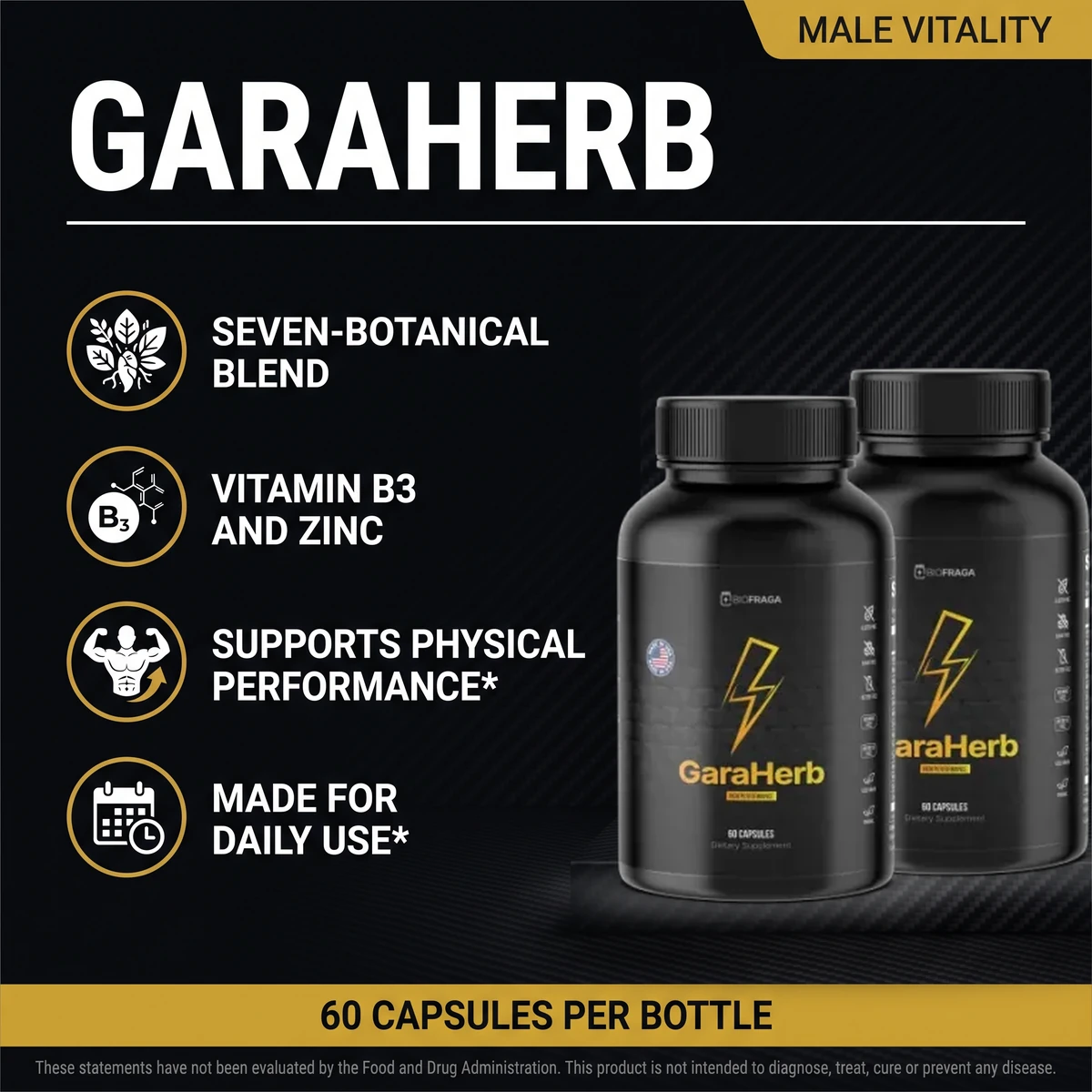
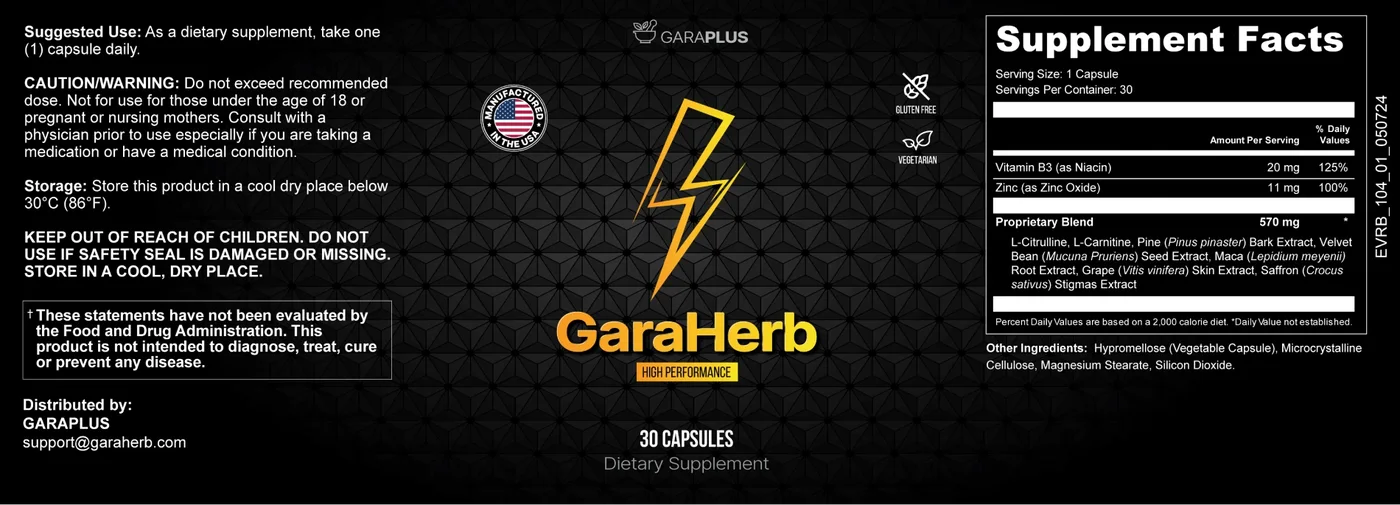
A note on our own product: Shilajit is not an ingredient in GaraHerb. This guide is general ingredient education. The GaraHerb Supplement Facts panel lists Vitamin B3, Zinc and a 570 mg blend of L-Citrulline, L-Carnitine, Pine bark, Velvet bean, Maca root, Grape skin and Saffron — you can read the full panel on the GaraHerb ingredients page.
Keep reading
- Zinc and testosterone: how the mineral supports men’s health
- Magnesium benefits for men: sleep, muscle and energy
- How to support male vitality naturally
- See the full GaraHerb formula and ingredient panel →
Frequently asked questions
What are the main shilajit benefits for men?
Shilajit is a mineral-rich resin traditionally used to support everyday energy, stamina and vitality. Its two headline actives are fulvic acid, an antioxidant carrier compound, and dibenzo-α-pyrones, plus a spread of trace minerals. Research on purified shilajit has looked at cellular energy, exercise recovery and maintaining normal testosterone in healthy men, but it is best viewed as a general wellness botanical rather than a treatment.
Does shilajit raise testosterone?
A small controlled study in healthy men aged 45 to 55 found that purified shilajit taken over 90 days helped maintain testosterone within the normal range compared with placebo. That is best read as supporting normal levels rather than boosting a healthy man beyond his own range. It is not a replacement for medical care if testosterone is genuinely low.
How much shilajit should you take?
Studies on purified shilajit have commonly used 250 mg to 500 mg per day. There is no official RDA because it is a botanical, not a nutrient, so follow the dose printed on a reputable, purified product and do not exceed it. More is not better.
Is shilajit safe?
Purified, lab-tested shilajit is generally well tolerated by healthy adults at labelled doses. Raw or unpurified shilajit can contain heavy metals, fungi or other contaminants, which is why purification and third-party heavy-metal testing matter so much. Anyone with a medical condition, on medication, or with gout or high iron should speak to a doctor first.
What is fulvic acid and why does it matter in shilajit?
Fulvic acid is a small carbon-rich molecule formed as plant matter breaks down over centuries. It is the marker compound used to standardize quality shilajit, acts as an antioxidant, and is thought to help carry minerals into cells. A good label states the fulvic acid percentage so you know the resin is concentrated and genuine.
How is shilajit best taken and how long until it works?
Resin or capsules are taken once daily, usually with water or a warm drink and ideally at a consistent time. Because its effects are subtle and cumulative, most people give it a steady run of several weeks rather than expecting an overnight change. Consistency matters more than timing.
References
- Carrasco-Gallardo C, et al. “Shilajit: a natural phytocomplex with potential procognitive activity.” International Journal of Alzheimer’s Disease, 2012. pubmed.ncbi.nlm.nih.gov
- Pandit S, et al. “Clinical evaluation of purified shilajit on testosterone levels in healthy volunteers.” Andrologia, 2016. pubmed.ncbi.nlm.nih.gov
- Stohs SJ. “Safety and efficacy of shilajit (mumie, moomiyo).” Phytotherapy Research, 2014. pubmed.ncbi.nlm.nih.gov
- Examine.com. “Shilajit: evidence-based analysis.” examine.com
- National Institutes of Health, Office of Dietary Supplements. “Dietary Supplements: What You Need to Know.” ods.od.nih.gov
The GaraHerb Research Team is an independent group of men’s-health writers and supplement editors who turn ingredient science and label-reading know-how into plain English. We are not your doctor and we do not sell medical advice — our job is to help you understand how each active works so you can shop and supplement with confidence. Every guide is checked against primary sources such as peer-reviewed research and the NIH Office of Dietary Supplements, and reviewed for accuracy before publishing.
Spotted something that needs correcting? Reach us through our contact page, or read more about who we are.
† These statements have not been evaluated by the Food and Drug Administration. This product is not intended to diagnose, treat, cure or prevent any disease. This article is for general information only and is not medical advice. Speak with your physician before starting any new supplement.