Boron and Testosterone: How the Trace Mineral Works
| What it is | Boron is an ultra-trace mineral found in fruit, nuts and legumes — needed in tiny amounts, not a hormone. |
| How it works | Studied for influencing hormone balance: it may help lower SHBG (the protein that binds testosterone), supporting a healthier free testosterone fraction. |
| Estrogen angle | Some research also links boron to healthier estrogen metabolism — part of overall male hormonal balance, not a “booster”. |
| On a label | A trace-mineral dose (often ~3–10 mg); look for a named form such as boron citrate, glycinate or a “bororganic” complex. |
Most men have heard of zinc and magnesium for hormonal health, but far fewer know about boron — an ultra-trace mineral that punches well above its tiny dose. The connection between boron and testosterone is one of the more intriguing corners of men’s nutrition, precisely because it is not about adding hormone at all. It is about balance: how much of the testosterone you already make ends up in a usable form. This guide explains how boron is thought to influence free testosterone, SHBG and estrogen balance, the dosing context, where to get it from food, and what to look for on a label.
This is general wellness information, not medical advice. Boron is a dietary trace mineral used to support normal hormonal balance — it is not a hormone, a drug, or a treatment for any medical condition.
What is boron?
Boron is a naturally occurring trace element found in soil, water and, most importantly for us, in plant foods. It is classed as an ultra-trace mineral, meaning the body needs only tiny amounts — a few milligrams a day, not the hundreds of milligrams typical of minerals like magnesium or calcium. For years boron was overlooked because no severe deficiency disease was pinned to it, but research has steadily built a picture of a mineral involved in bone health, mineral metabolism and, of particular interest here, hormone regulation.
Crucially, boron is not a hormone and contains no testosterone. Like zinc, it is a nutritional raw material and regulator — a small cog that helps other systems run properly. That framing matters, because it explains why the effect of boron is about optimisation and balance rather than a crude “boost.”
How boron affects testosterone: the SHBG and free-testosterone story
To understand boron’s role you need the same key concept that underpins several men’s ingredients: free testosterone. The majority of the testosterone circulating in your blood is bound tightly to a carrier protein called sex hormone-binding globulin (SHBG). While bound, it is effectively in storage and cannot act on your tissues. Only the small unbound portion — free testosterone — can actually reach receptors and do its job.
- Boron and SHBG. Research on boron and hormonal balance suggests it may help lower SHBG. Less binding protein means a greater share of the testosterone already present can remain free and usable.
- The result is about the free fraction. The interesting part of the boron free testosterone connection is that it works on availability, not production. Boron is not telling your body to make more; it is helping more of what you make stay in the active form.
- An estrogen-balance angle. Some studies also link boron to healthier estrogen metabolism in men. Balanced estrogen is a normal and necessary part of male physiology, so this is best understood as supporting overall balance rather than “lowering” anything for its own sake.
Put together, boron’s mechanism is a story about hormonal efficiency. It is the same theme you see with tongkat ali — supporting the free fraction rather than flooding the system — approached from a mineral rather than a botanical direction.
Dosing context: a little goes a long way
Boron is the opposite of a “more is better” ingredient. For general education only, research on boron and hormonal balance commonly uses modest amounts in the range of a few milligrams per day — often around 3 to 10 mg. That is a genuine trace-mineral dose, and it is worth internalising, because boron is a mineral where restraint is the point. Health authorities publish a tolerable upper intake level for boron in adults, and staying comfortably within it is sensible.
This modest dosing is exactly why boron fits so naturally into a multi-ingredient blend. It does not need to be a headline megadose; it needs to be present at a sensible amount to play its supporting role in hormonal balance. In a well-built men’s formula, boron is a small but meaningful contributor alongside larger actives, and you should always follow the amount on the label rather than stacking extra on top.
Want trace minerals combined with botanicals for balanced daily support?
See GaraHerb PackagesFood sources of boron
One of the nicest things about boron is that a good diet supplies it naturally. The richest sources are plant foods, especially fruit:
- Dried fruit such as raisins and prunes are among the most concentrated sources.
- Fresh fruit including apples, pears, avocado and grapes.
- Nuts and legumes such as almonds, peanuts, chickpeas and beans.
- Some leafy vegetables and other plant foods contribute smaller amounts.
This is a useful reminder that supplements complement a diet rather than replace it. A man eating plenty of fruit, nuts and legumes is already getting boron; a supplement simply helps top up and standardise intake, particularly for those whose diets are light on these foods.
What to look for on a boron label
- A named form. Look for boron citrate, boron glycinate, or a “bororganic”/chelated complex — forms designed for good absorption — rather than an unspecified “boron.”
- A sensible amount. A few milligrams is the norm. A modest dose here is a sign the formulator understands boron is a trace mineral, not a megadose ingredient.
- Good company. Boron works best as part of a balanced hormonal-support picture, alongside minerals like zinc and botanicals that support the same theme — so a thoughtfully built men’s blend is a logical home.
- Clean manufacturing. Choose products made in an FDA-registered, GMP-certified facility, with allergen and vegetarian status stated.
Because boron and zinc both support the hormonal picture from the mineral side, they make a natural pair — see our guide to zinc and testosterone. And because the free-testosterone theme also runs through botanicals, compare it with how tongkat ali works for testosterone to see the same idea from a plant angle.
One capsule a day, gluten-free and vegetarian, with a 60-day money-back guarantee.
Get GaraHerb Today
Who tends to use boron — and simple safety
Men interested in supporting healthy hormonal balance — particularly the free-testosterone fraction — are the typical users, as are those whose diets are light on the fruit, nuts and legumes that supply boron naturally. Because it also plays a role in bone and mineral metabolism, its appeal reaches beyond hormones alone. At the small doses used in food and supplements, boron is generally recognised as safe for healthy adults.
The main safety point with boron is respecting its trace-mineral nature. Do not exceed the labelled dose, and remember that intake adds up across food and any supplements you take, so keep total intake within the published upper level. Anyone pregnant, breastfeeding, under 18, or with a medical condition should speak with a doctor before supplementing. As with every ingredient in this series, boron supports good habits — a whole-food diet, sleep and movement — rather than replacing them.
The small mineral with an outsized idea
Boron is easy to dismiss because the doses are so tiny and the mechanism so quiet. But the idea behind it is one of the most important in men’s nutrition: your hormonal health is not only about how much testosterone you produce, but about how much of it is actually available to your body. A trace mineral that helps support a healthier free fraction, and healthier estrogen balance alongside it, is doing something genuinely useful — not by shouting, but by fine-tuning.
That is why boron belongs in a considered men’s blend at a sensible dose rather than as a stand-alone megadose. Paired with a diet rich in fruit and nuts, and with the other actives that support hormonal balance and circulation, boron rounds out the picture. It is the small mineral that reminds us balance, not brute force, is what mature men’s-health nutrition is really about.
Boron is generally discussed for the free-testosterone fraction, while the other half of the male-hormone conversation is what happens downstream to DHT. That is the subject of saw palmetto benefits for men, which looks at 5-alpha-reductase and the prostate evidence.
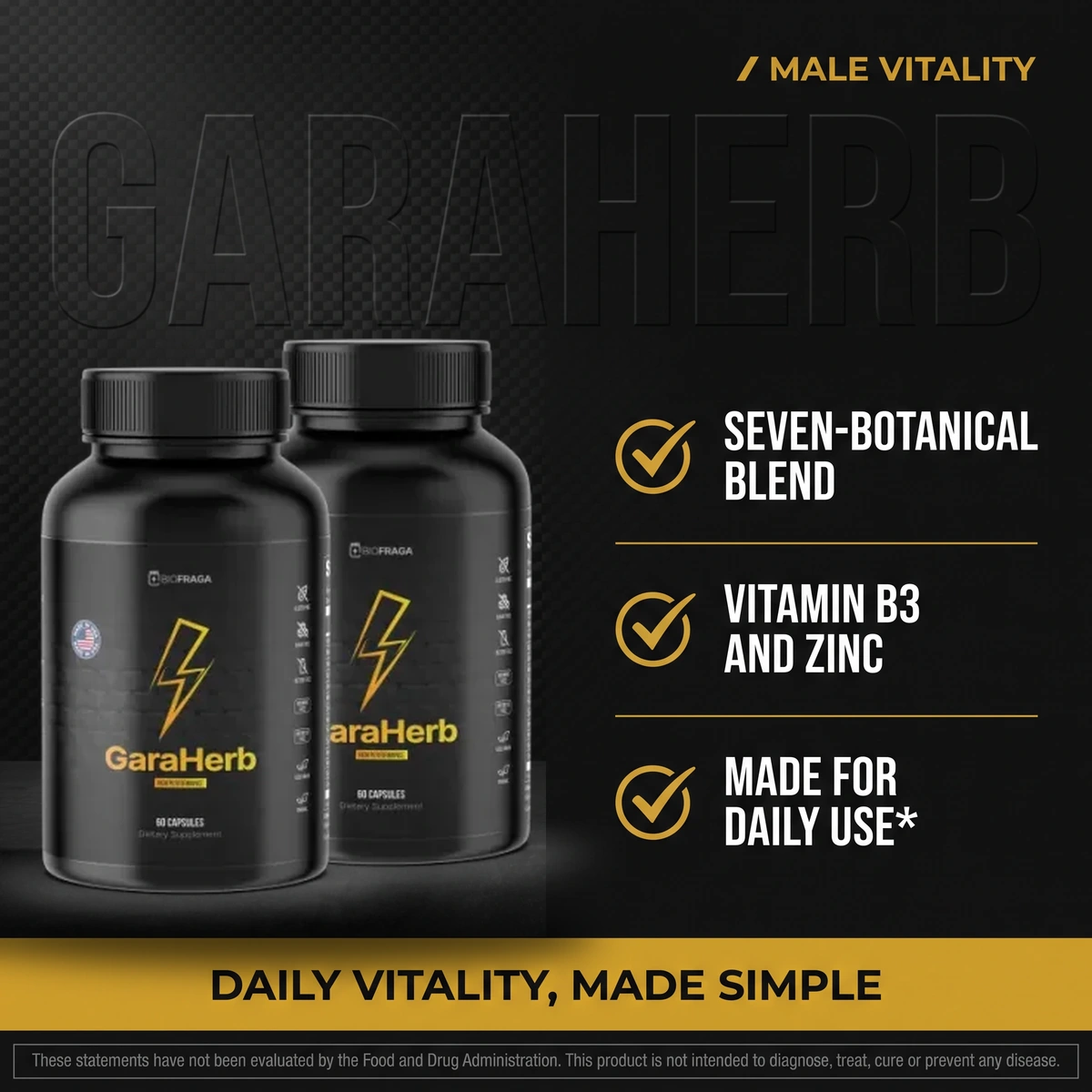
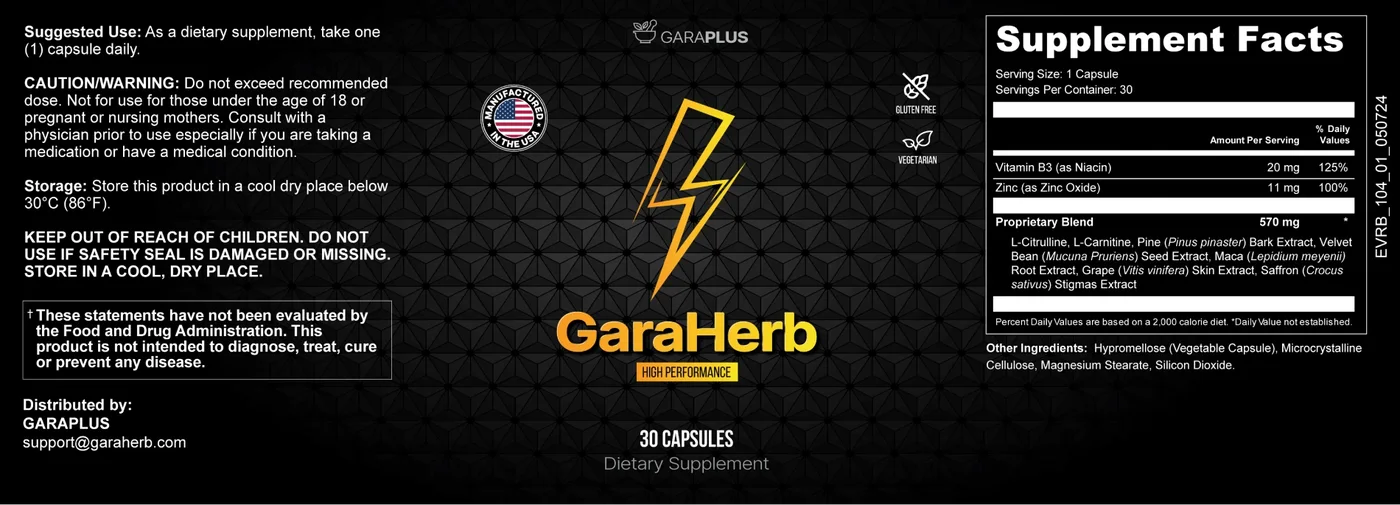
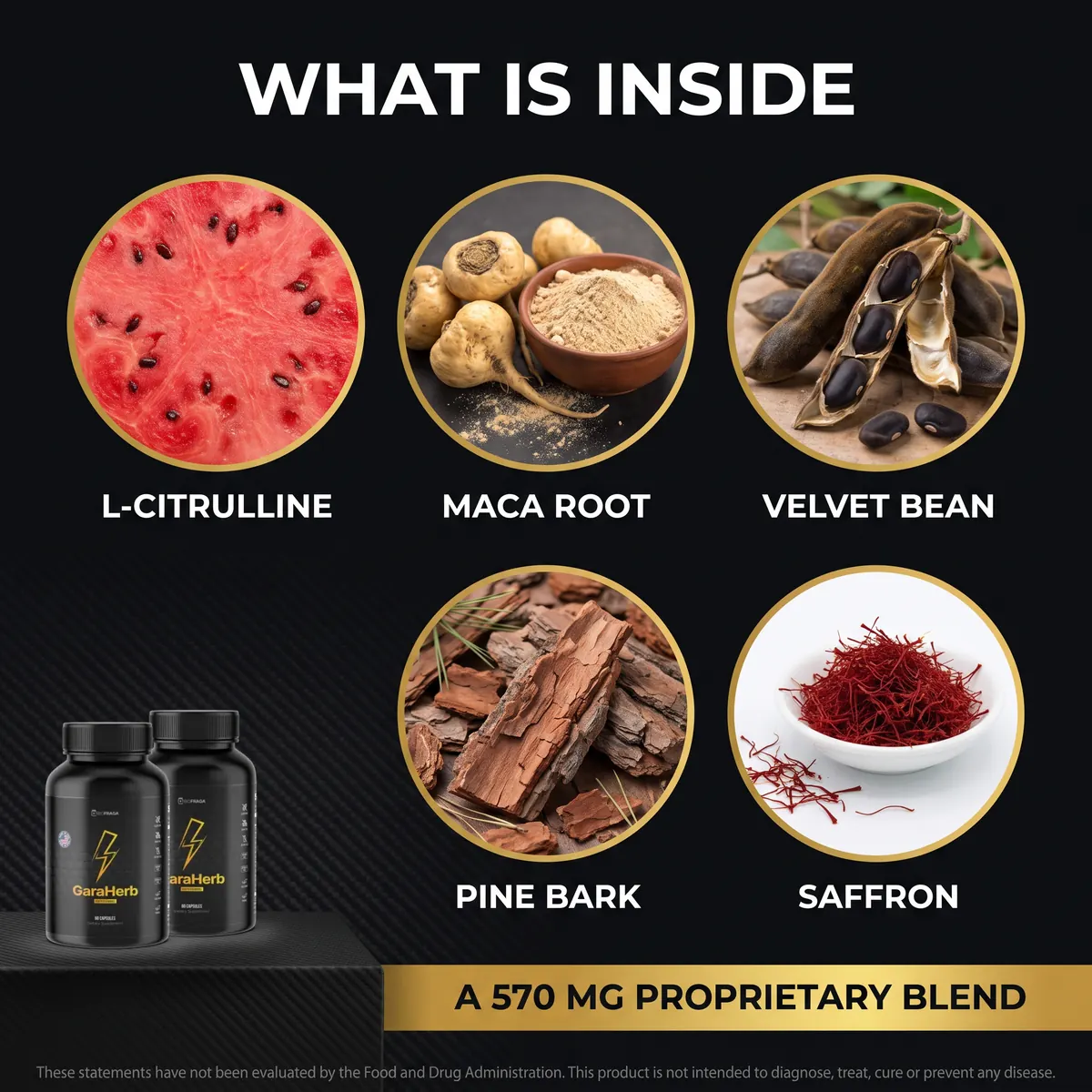
A note on our own product: Boron is not an ingredient in GaraHerb. This guide is general ingredient education. The GaraHerb Supplement Facts panel lists Vitamin B3, Zinc and a 570 mg blend of L-Citrulline, L-Carnitine, Pine bark, Velvet bean, Maca root, Grape skin and Saffron — you can read the full panel on the GaraHerb ingredients page.
Keep reading
- Zinc and testosterone: how the mineral supports men
- How does tongkat ali work for testosterone?
- How to support male vitality naturally
- See the full GaraHerb formula and ingredient panel →
Frequently asked questions
How does boron affect testosterone?
Boron is a trace mineral that is studied for influencing the balance of hormones rather than adding any. Research suggests it may help lower sex hormone-binding globulin (SHBG), the protein that binds testosterone, so that more of the testosterone already present stays in its free, usable form. It supports normal hormonal balance and is not a hormone or a treatment for any condition.
What is free testosterone and why does boron matter?
Most testosterone in the blood is bound to SHBG and is unavailable to tissues. Only the small unbound fraction, called free testosterone, can act on receptors. Boron is of interest because it may support a healthier free fraction by influencing SHBG, meaning the testosterone you already make can be used more effectively.
How much boron do studies use?
Research on boron and hormonal balance commonly uses modest amounts in the range of a few milligrams per day, such as around 3 to 10 mg. This is a trace-mineral dose, not a megadose. In a multi-ingredient men’s blend, boron is one small contributor, so follow the amount on the label and do not exceed it.
Which foods contain boron?
Boron is found in plant foods, especially fruit such as raisins, prunes, apples and avocado, plus nuts, legumes and some leafy vegetables. A diet rich in these foods supplies boron naturally, which is one reason a whole-food diet supports the same hormonal balance a supplement aims to complement.
Is boron safe to take daily?
At the small doses used in supplements and found in food, boron is generally recognised as safe for healthy adults, and health authorities publish an upper intake level for it. Do not exceed the labelled dose, and take total intake from food and supplements into account. Anyone pregnant, breastfeeding, under 18, or with a medical condition should speak with a doctor first.
References
- National Institutes of Health, Office of Dietary Supplements. “Boron: Fact Sheet for Health Professionals.” ods.od.nih.gov
- Examine.com. “Boron: evidence-based analysis.” examine.com
- MedlinePlus, U.S. National Library of Medicine. “Boron.” medlineplus.gov
- National Center for Complementary and Integrative Health. “Using Dietary Supplements Wisely.” nccih.nih.gov
The GaraHerb Research Team is an independent group of men’s-health writers and supplement editors who turn ingredient science and label-reading know-how into plain English. We are not your doctor and we do not sell medical advice — our job is to help you understand how each active works so you can shop and supplement with confidence. Every guide is checked against primary sources such as the NIH Office of Dietary Supplements and peer-reviewed research, and reviewed for accuracy before publishing.
Spotted something that needs correcting? Reach us through our contact page, or read more about who we are.
† These statements have not been evaluated by the Food and Drug Administration. This product is not intended to diagnose, treat, cure or prevent any disease. This article is for general information only and is not medical advice. Speak with your physician before starting any new supplement.