Zinc and Testosterone: How the Mineral Supports Men’s Health
| The link | Zinc is an essential mineral required for normal testosterone production; a deficiency can lower testosterone, and correcting it helps restore normal levels. |
| Key point | Zinc supports normal levels — topping up beyond your needs does not push a healthy man’s testosterone higher. |
| How much | The RDA for adult men is 11 mg/day; the tolerable upper limit is 40 mg/day from all sources. |
| On a label | Check the form (citrate and picolinate absorb well), the elemental amount, and that it stays within sensible limits. |
The connection between zinc and testosterone is one of the most established in men’s nutrition — and also one of the most misunderstood. Zinc is genuinely essential for making testosterone, but that does not mean more zinc equals more testosterone. This guide explains the real mechanism behind zinc and testosterone, who is most likely to fall short, how much men actually need, how the different forms of zinc compare, and what to look for on a label so you get a useful amount without overdoing it. It is general information, not medical advice.
Why zinc matters for men
Zinc is a trace mineral your body cannot store in large amounts, so you need a steady dietary supply. It is a cofactor for hundreds of enzymes and is involved in immune function, wound healing, DNA synthesis, sense of taste and smell — and, relevant here, normal reproductive function. It is especially concentrated in the prostate and is present in high amounts in semen, which is one reason it is so tied to male health.
How zinc supports testosterone: the mechanism
The zinc and testosterone relationship works through a few linked routes:
- Enzyme support. The enzymes that build testosterone from cholesterol in the testes depend on zinc. Without enough zinc, that production line runs less efficiently.
- Signalling from the brain. Zinc is involved in the release of luteinizing hormone, the pituitary signal that tells the testes to produce testosterone.
- Protecting the balance. Zinc appears to modestly influence aromatase, the enzyme that converts testosterone into estrogen, helping keep the balance in a normal range.
The crucial nuance: these effects are about maintaining normal function. In men who are deficient, restoring zinc has been shown to help restore normal testosterone. In men who already have enough, adding more does not push testosterone above the normal range — the body simply excretes the excess. So zinc is best thought of as insurance against a shortfall, not a booster.
Who is most likely to be low in zinc?
Many men get enough zinc from food (red meat, shellfish, poultry, beans, nuts and seeds are all good sources), but shortfalls are common in certain groups:
- Men eating little animal protein, including vegetarians and vegans (plant zinc is less well absorbed because of phytates).
- Heavy trainers and people who sweat a lot, since zinc is lost in sweat.
- Older men and those with digestive conditions that reduce absorption.
- Heavy drinkers, since alcohol reduces zinc absorption and increases loss.
Signs of low zinc can include frequent illness, slow wound healing, hair thinning and a dulled sense of taste — but these overlap with many other things, so they are only a prompt to look at your intake, not a diagnosis.
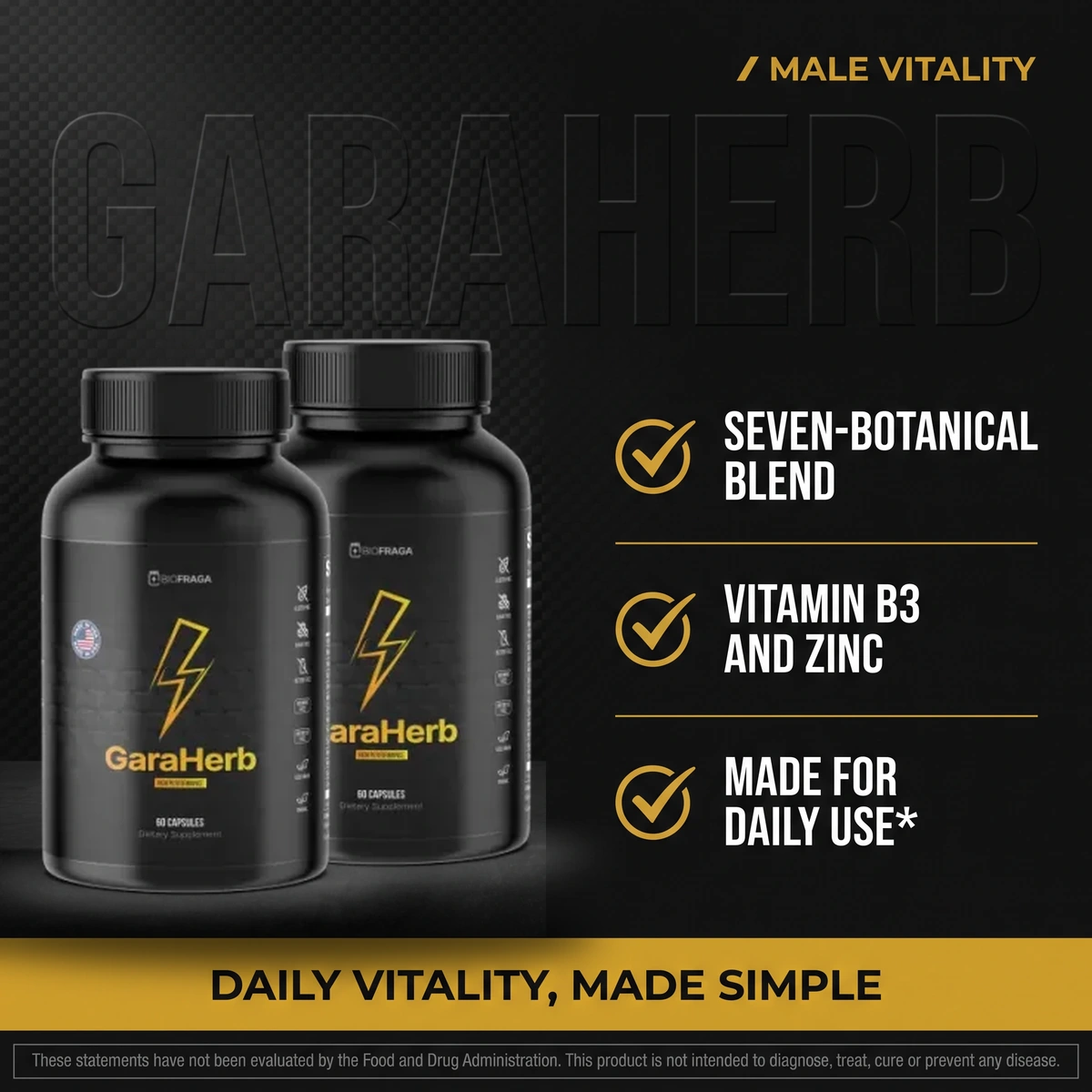
Want zinc at 100% of the Daily Value alongside seven vitality botanicals?
See GaraHerb PackagesHow much zinc do men need?
The Recommended Dietary Allowance (RDA) for adult men is 11 mg per day. The tolerable upper intake level — the most you should get from all sources long-term without risking side effects — is 40 mg per day. This is why a well-designed daily supplement typically supplies around 100% of the Daily Value (11 mg) rather than a mega-dose: it tops up a likely gap while leaving plenty of headroom below the upper limit for the zinc you also get from food.
Going far above the upper limit for long periods can actually backfire, most notably by causing a copper deficiency, because zinc and copper compete for absorption. More is not better here; enough is better.
Forms of zinc: which absorb well?
The label will list zinc “as” a particular compound. Common forms include:
- Zinc picolinate — well absorbed and popular.
- Zinc citrate — well absorbed and gentle.
- Zinc gluconate — common and reasonably absorbed.
- Zinc oxide — less soluble and generally less well absorbed, but inexpensive and still widely used, often at a supporting dose within a broader formula.
Whatever the form, what matters is the elemental zinc amount — the actual milligrams of zinc — which is what the Daily Value percentage on the label reflects.
What to look for on a label
- Elemental zinc around the RDA (roughly 11 mg / 100% DV) for everyday support, not a mega-dose.
- The form stated (e.g. citrate, picolinate, gluconate or oxide) so you know what you are getting.
- Total intake in mind. Remember your food and any other supplements count toward the 40 mg upper limit.
- Good company. Zinc pairs logically with Vitamin B3 and vitality botanicals; a men’s blend is a natural home for it.
- Clean manufacturing in an FDA-registered, GMP-certified facility.
Zinc rarely works in isolation. For the habits and nutrients that support it, see how to support male vitality naturally, and for another circulation-focused active, read about pine bark extract benefits.
Simple safety notes
At sensible amounts zinc is safe for most adults. Very high doses can cause nausea and, over time, copper deficiency and immune effects. Do not exceed the labelled dose or the 40 mg upper limit from all sources. If you take antibiotics or certain other medicines (zinc can affect their absorption), have a medical condition, or are unsure, check with your doctor first.
One capsule a day with 100% DV zinc, backed by a 60-day guarantee.
Get GaraHerb Today
Zinc beyond testosterone: the bigger picture
Testosterone gets the headlines, but zinc quietly supports much more. It is central to a healthy immune response, to wound healing, to your senses of taste and smell, and to the health of the prostate, where it is especially concentrated. That broad role is part of why a shortfall can show up in vague, easy-to-miss ways, and why keeping intake near the recommended level is a sensible baseline for men.
It also explains why zinc is such a common companion in men’s blends: a mineral this fundamental belongs in an everyday formula, at a sensible dose rather than a mega-dose. The smartest approach is food-first — shellfish, meat, beans, nuts and seeds — with a supplement topping up the gap to around 100% of the Daily Value. That covers a likely shortfall while leaving comfortable room below the upper limit for everything you eat.
Zinc is the classic example of a nutrient that matters most when you are short of it. The other nutrient that behaves the same way for men’s hormones is covered in vitamin D and testosterone, where correcting a deficiency is the whole of the effect.
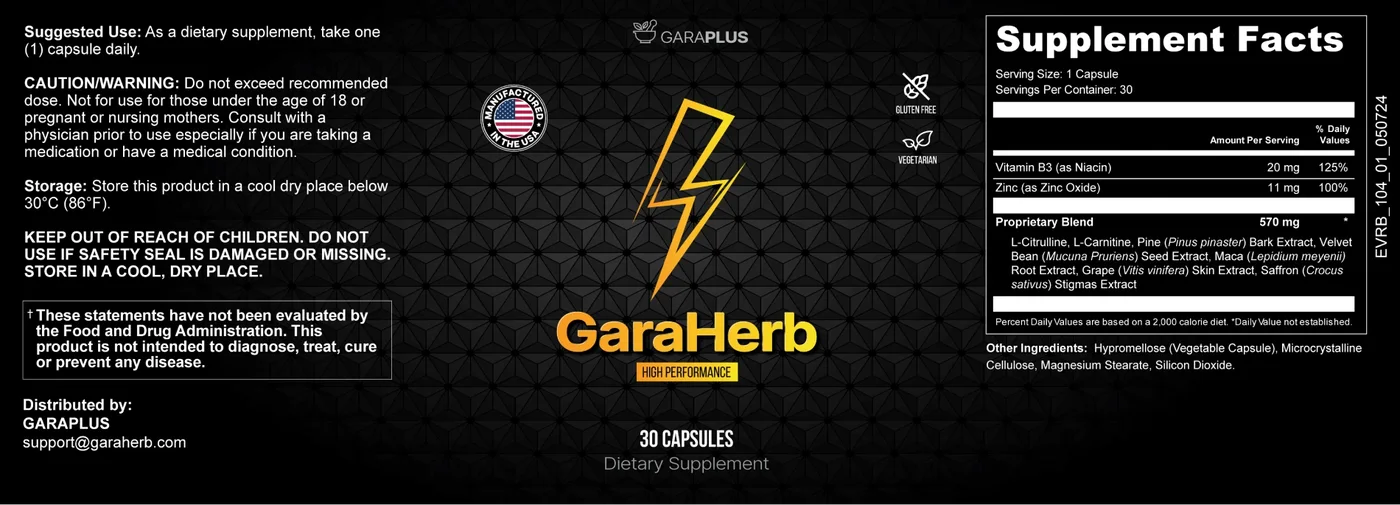
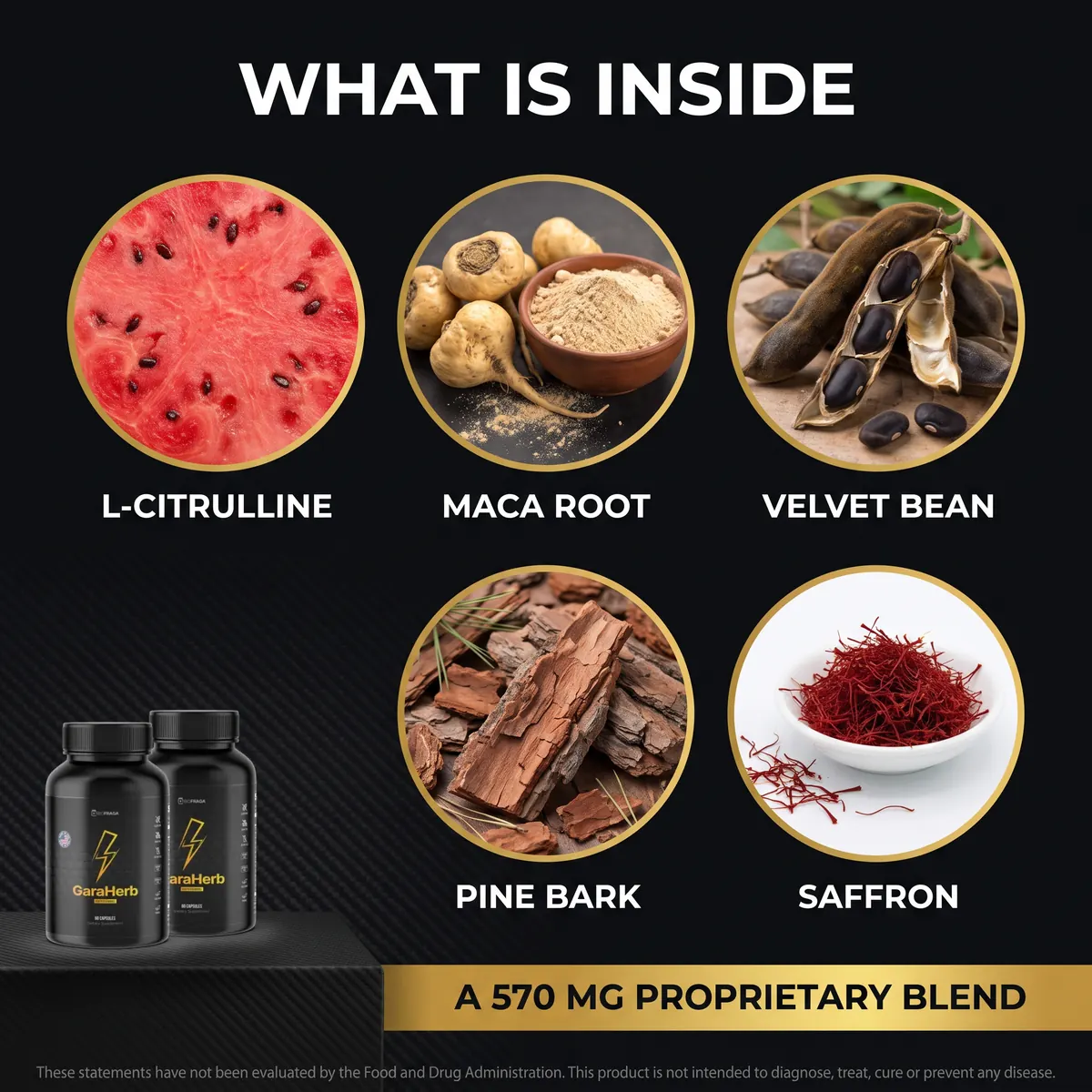
A note on our own product: Zinc is one of the actives listed on the GaraHerb Supplement Facts panel. Because it sits inside a 570 mg proprietary blend, the label does not state its individual milligram amount, and we do not guess at one. The full panel is transcribed on the GaraHerb ingredients page.
Keep reading
- How L-citrulline supports blood flow and nitric oxide
- Maca root benefits for men: how the adaptogen works
- How to support male vitality naturally
- See the full GaraHerb formula and ingredient panel →
Frequently asked questions
Does zinc increase testosterone?
Zinc supports normal testosterone production, and correcting a zinc deficiency can help restore normal levels. But in men who already have enough zinc, taking more does not push testosterone above the normal range. Zinc is best thought of as insurance against a shortfall, not a booster.
How much zinc should a man take per day?
The RDA for adult men is 11 mg per day, and the tolerable upper limit from all sources is 40 mg per day. A daily supplement providing around 100% of the Daily Value (about 11 mg) tops up a likely gap while leaving room for the zinc you also get from food.
Which form of zinc is best?
Zinc citrate and zinc picolinate are well absorbed; gluconate is common; zinc oxide is less soluble but inexpensive and still widely used at supporting doses. What matters most is the amount of elemental zinc, which the Daily Value percentage reflects.
Can you take too much zinc?
Yes. Long-term intake above the 40 mg upper limit can cause nausea and, over time, a copper deficiency because zinc and copper compete for absorption. Stay within the labelled dose and count zinc from food and other supplements toward your total.
Who is most likely to be low in zinc?
Men who eat little animal protein, vegetarians and vegans, heavy trainers who sweat a lot, older men, people with digestive conditions, and heavy drinkers are more likely to fall short. Good food sources include shellfish, red meat, poultry, beans, nuts and seeds.
References
- National Institutes of Health, Office of Dietary Supplements. “Zinc — Fact Sheet for Health Professionals.” ods.od.nih.gov
- National Institutes of Health, Office of Dietary Supplements. “Zinc — Fact Sheet for Consumers.” ods.od.nih.gov
- Prasad AS, et al. “Zinc status and serum testosterone levels of healthy adults.” Nutrition, 1996. pubmed.ncbi.nlm.nih.gov
- Examine.com. “Zinc: evidence-based analysis.” examine.com
The GaraHerb Research Team is an independent group of men’s-health writers and supplement editors who turn ingredient science and label-reading know-how into plain English. We are not your doctor and we do not sell medical advice — our job is to help you understand how each active works so you can shop and supplement with confidence. Every guide is checked against primary sources such as the NIH Office of Dietary Supplements and peer-reviewed research, and reviewed for accuracy before publishing.
Spotted something that needs correcting? Reach us through our contact page, or read more about who we are.
† These statements have not been evaluated by the Food and Drug Administration. This product is not intended to diagnose, treat, cure or prevent any disease. This article is for general information only and is not medical advice. Speak with your physician before starting any new supplement.