How Does L-Citrulline Support Blood Flow? The Nitric Oxide Guide
| What it is | L-citrulline is a non-essential amino acid found in watermelon and made by the body. |
| How it works | The kidneys convert L-citrulline into L-arginine, the direct raw material for nitric oxide (NO) — the molecule that helps blood vessels relax and widen. |
| Why not just arginine? | Citrulline survives digestion better and raises blood arginine more reliably, so it supports the nitric-oxide pathway efficiently. |
| On a label | Look for L-citrulline (or citrulline malate) with the amount clearly listed; study ranges are typically 3–6 g for standalone use. |
If you have ever wondered how L-citrulline supports blood flow, the short version is that it feeds one specific chemical pathway your body uses to keep circulation healthy: the nitric-oxide pathway. This guide unpacks that mechanism in plain language — what L-citrulline is, how the L-citrulline nitric oxide conversion actually happens, why it often beats plain arginine, what the research uses for dosing, and what to check on a supplement label so you know what you are really buying.
None of this is a treatment for a medical condition. L-citrulline is a food-derived amino acid used to support healthy, everyday circulation and exercise performance — it is general wellness information, not medical advice.
What is L-citrulline?
L-citrulline is a non-essential amino acid, meaning your body can make some of it on its own. It also shows up in food — watermelon is the best-known dietary source, and the name comes from Citrullus, the Latin for watermelon. Unlike amino acids used mainly to build muscle protein, citrulline’s claim to fame is metabolic: it is a key player in the urea cycle and, more usefully for circulation, a precursor to L-arginine.
That precursor role is the whole story. Citrulline is valued not for what it is, but for what your body turns it into.
How L-citrulline supports blood flow: the nitric oxide pathway
Here is the mechanism step by step:
- Step 1 — Absorption. You take L-citrulline; it is absorbed and travels in the blood to the kidneys.
- Step 2 — Conversion to arginine. The kidneys convert citrulline into L-arginine, raising circulating arginine levels.
- Step 3 — Nitric oxide production. An enzyme called nitric oxide synthase uses that arginine to produce nitric oxide (NO) in the cells lining your blood vessels (the endothelium).
- Step 4 — Vasodilation. Nitric oxide signals the smooth muscle around blood vessels to relax, so the vessel widens (vasodilates) and blood flows more easily.
Better vessel relaxation is why the L-citrulline nitric oxide connection matters for men interested in circulation, workout “pump,” and steady energy. Nitric oxide is a signalling molecule your cardiovascular system relies on every day; giving the pathway a well-absorbed raw material is a way to support it nutritionally.
L-citrulline vs L-arginine: why the detour wins
It seems logical to skip the middle step and just take arginine, since arginine is what makes nitric oxide. In practice, supplemental arginine is largely broken down in the gut and liver by an enzyme called arginase before it reaches your bloodstream, so a big oral dose does not raise blood arginine as much as you would expect. Citrulline bypasses that first-pass breakdown, then converts to arginine downstream — which is why gram-for-gram, citrulline is often the more efficient way to raise plasma arginine and support the nitric-oxide pathway. That is the counter-intuitive part: the indirect route delivers arginine more reliably than arginine itself.
Food sources and everyday context
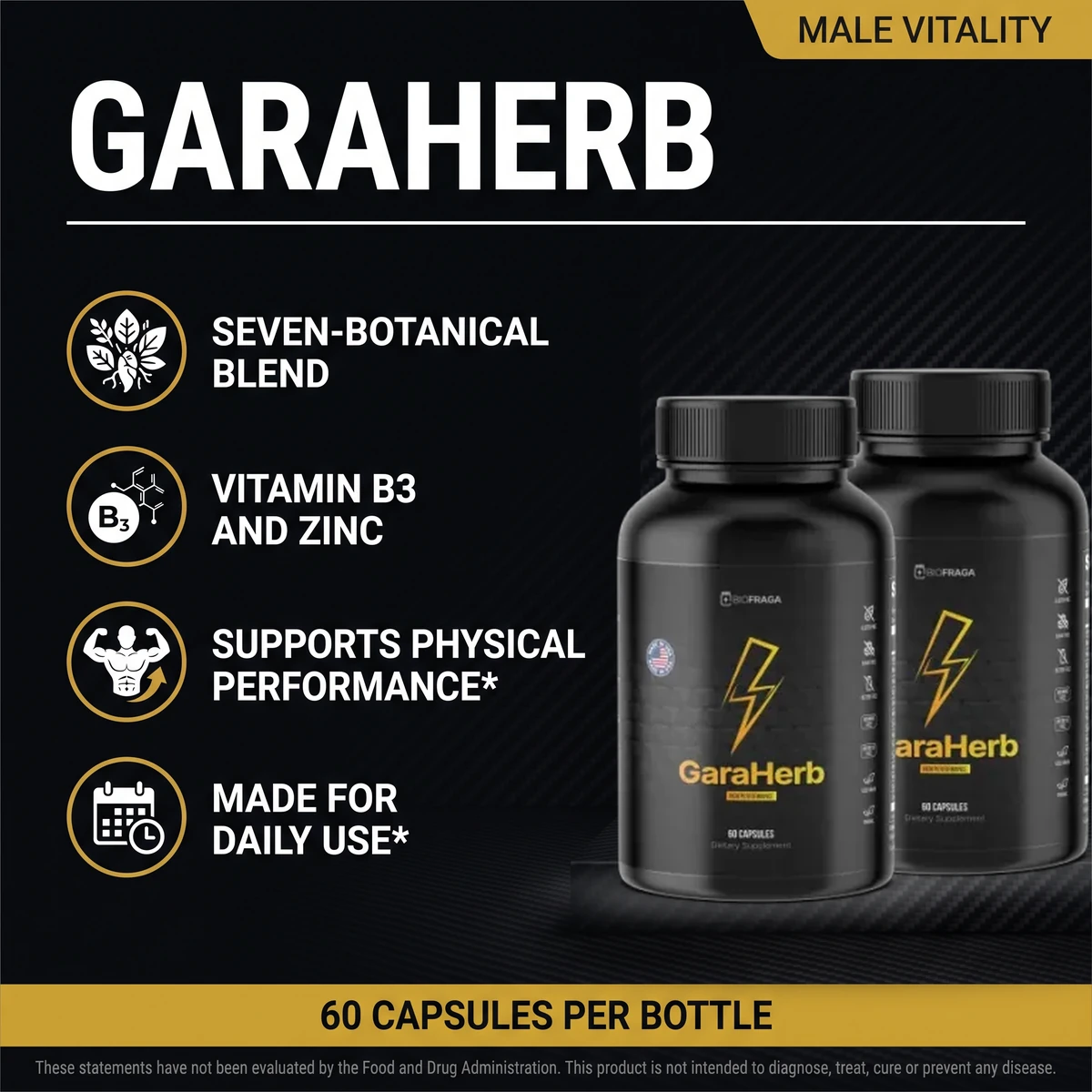
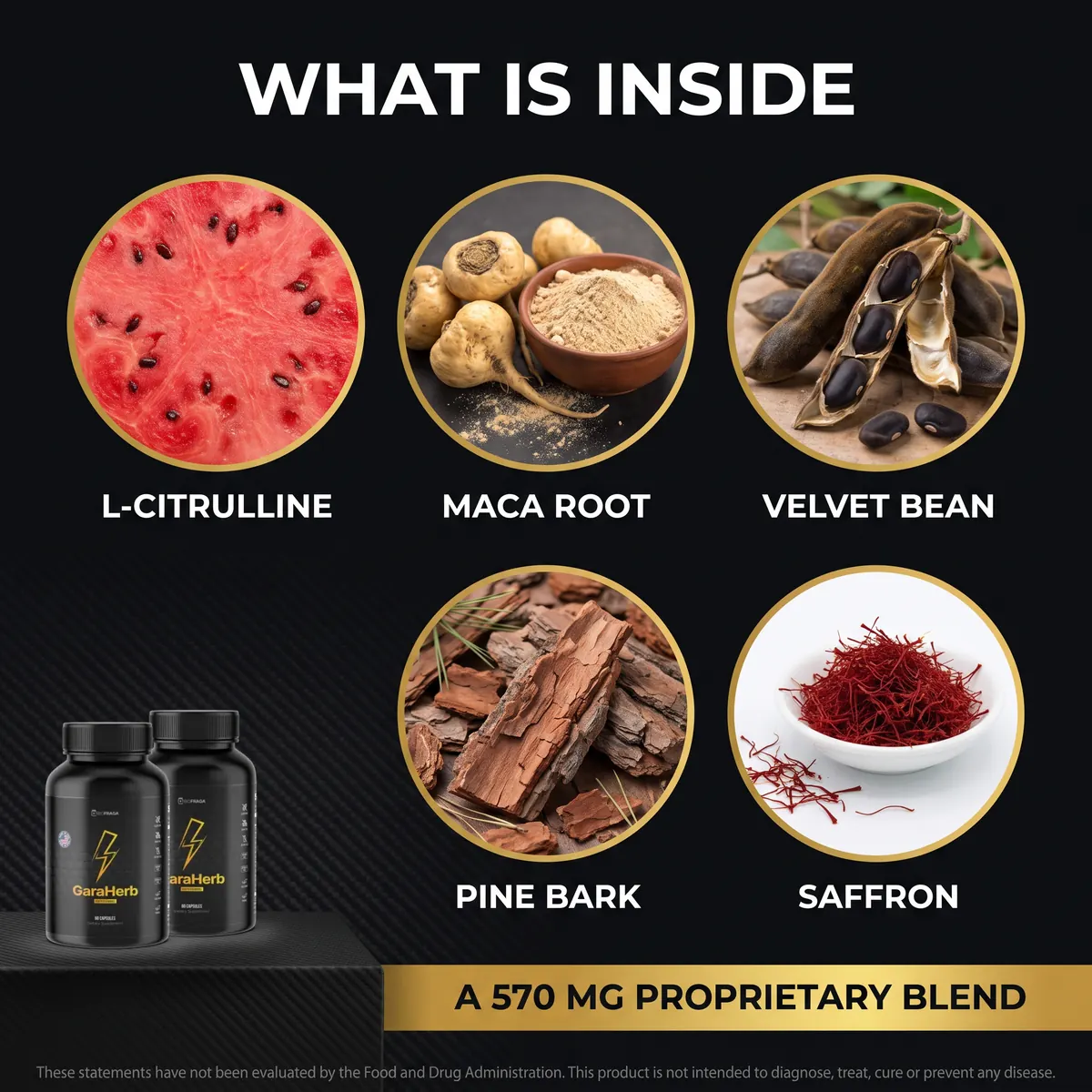
Watermelon (especially the flesh close to the rind) is the standout food source of citrulline, with smaller amounts in cucumber, pumpkin and other cucurbits. You would need to eat a lot of watermelon to match the amounts studied in supplements, which is why citrulline is popular in powder and capsule form — and why it appears alongside other circulation-supporting botanicals in blends built for men. In the GaraHerb formula, for example, L-citrulline leads a seven-botanical proprietary blend rather than standing alone.
Want L-citrulline paired with maca, pine bark and zinc in one daily capsule?
See GaraHerb PackagesDosing context: what the research uses
For general education, standalone L-citrulline studies commonly use around 3–6 grams per day, while “citrulline malate” (citrulline bound to malic acid, common in pre-workouts) is often used at 6–8 grams. Effects on the nitric-oxide pathway build with consistent daily use rather than from a single dose. In a multi-ingredient blend, citrulline is one contributor among several — the point of a blend is combined, complementary support rather than a mega-dose of any single active. Always follow the dose on the label you buy, and do not assume “more is better.”
What to look for on a label
- The exact form. “L-citrulline” is pure citrulline; “citrulline malate” includes malic acid, so a listed gram amount contains less actual citrulline. Know which one you are getting.
- A stated amount. The best labels show how much citrulline is present. In a proprietary blend the total blend weight is listed instead of each part — useful for combined formulas, but it means you are trusting the formulator’s ratios.
- Sensible company. Citrulline sits naturally beside other circulation and vitality actives — pine bark, maca and zinc among them — so a thoughtfully built men’s blend is a reasonable home for it.
- Clean manufacturing. Look for products made in an FDA-registered, GMP-certified facility, with allergen and vegetarian status stated if that matters to you.
Who tends to use L-citrulline — and simple safety
Active men interested in circulation and workout performance are the most common users, but citrulline’s appeal is broad because healthy blood flow underpins so much of everyday vitality. It is generally well tolerated; unlike some pre-workout stimulants, it is not a caffeine-type “buzz.” As with any supplement, do not exceed the labelled dose. If you take blood-pressure or erectile-function medication (such as nitrates or PDE5 inhibitors), have a medical condition, or are unsure, talk to your doctor first — because citrulline acts on the same nitric-oxide pathway those medicines target.
For the bigger picture on habits that amplify any circulation-supporting nutrient, see our guide on how to support male vitality naturally. To understand the antioxidant side of circulation, read about pine bark extract benefits for circulation.
One capsule a day, gluten-free and vegetarian, with a 60-day money-back guarantee.
Get GaraHerb Today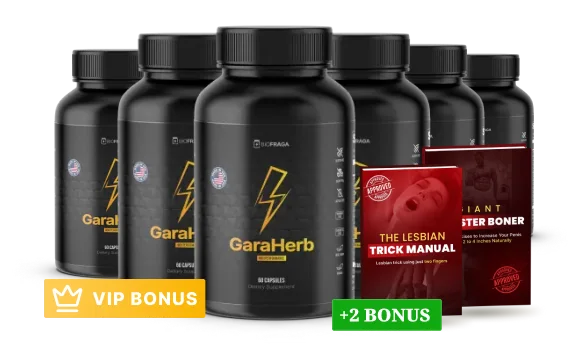
L-citrulline is not just for athletes
Because citrulline is a pre-workout favourite, it is easy to assume it only matters if you train hard. In reality the nitric-oxide pathway it feeds is used by your whole cardiovascular system every hour of every day. Healthy blood flow is how oxygen and nutrients reach your muscles, brain and organs, how your body manages temperature, and part of what keeps energy and focus steady between meals. That is a general-wellness benefit, not a niche athletic one.
Age is another reason the pathway is worth supporting. From roughly the mid-thirties onward, the endothelium tends to become a little less efficient at producing nitric oxide. Feeding the pathway with a well-absorbed precursor is one nutritional way to give it a hand, which is why L-citrulline appears in vitality blends aimed at everyday men rather than only in sports supplements. As always, it works best on top of the fundamentals — sleep, movement and a whole-food diet — rather than instead of them.
L-citrulline is not the only ingredient men reach for on the circulation side. The traditional counterpart is horny goat weed and its icariin content, which is often discussed for blood flow through a different proposed mechanism entirely.
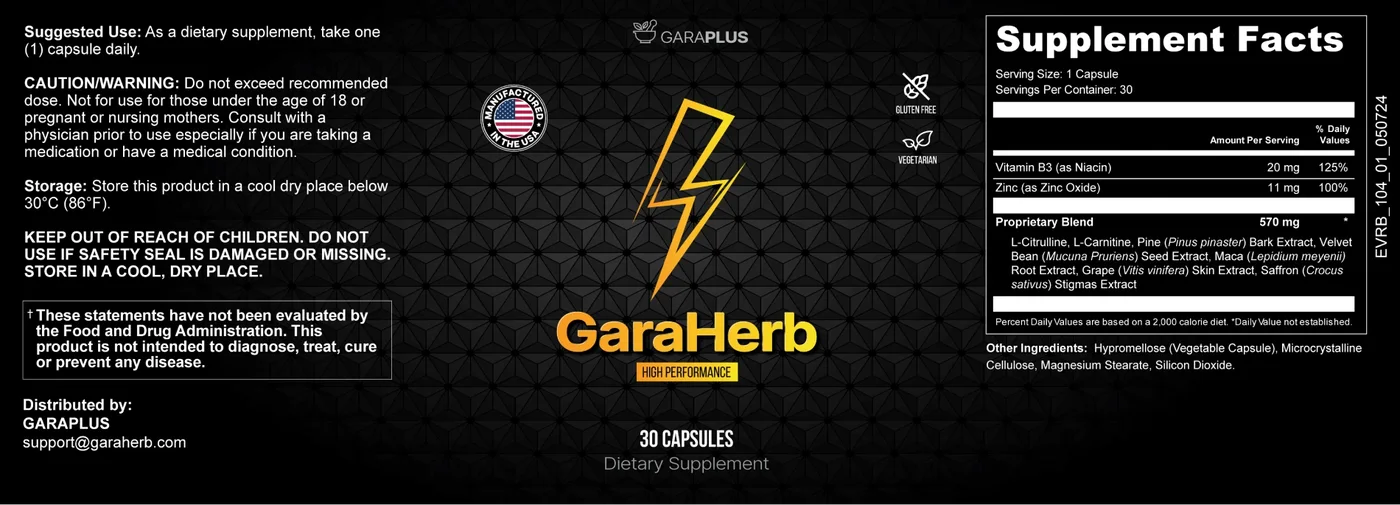
A note on our own product: L-Citrulline is one of the actives listed on the GaraHerb Supplement Facts panel. Because it sits inside a 570 mg proprietary blend, the label does not state its individual milligram amount, and we do not guess at one. The full panel is transcribed on the GaraHerb ingredients page.
Keep reading
- Maca root benefits for men: how the adaptogen works
- Zinc and testosterone: how the mineral supports men
- How to support male vitality naturally
- See the full GaraHerb formula and ingredient panel →
Frequently asked questions
How does L-citrulline support blood flow?
L-citrulline is converted by the kidneys into L-arginine, which the body uses to make nitric oxide. Nitric oxide signals blood vessels to relax and widen, which is how L-citrulline supports healthy circulation. It is a nutritional way to feed the nitric-oxide pathway, not a treatment for any condition.
Is L-citrulline better than L-arginine?
Gram for gram it often works out that way for raising blood arginine. Oral arginine is largely broken down in the gut and liver before it reaches the bloodstream, while citrulline bypasses that breakdown and then converts to arginine downstream, so it tends to support the nitric-oxide pathway more efficiently.
How much L-citrulline do studies use?
Standalone L-citrulline research commonly uses about 3 to 6 grams per day, and citrulline malate around 6 to 8 grams. In a multi-ingredient men's blend, citrulline is one contributor among several actives, so always follow the amount on the label you buy.
Does L-citrulline work right away?
Support for the nitric-oxide pathway builds with consistent daily use rather than from a single dose. Most people use it steadily for a few weeks alongside good sleep, movement and diet before judging how they feel.
Is L-citrulline safe to take daily?
For healthy adults it is generally well tolerated and is not a stimulant. Do not exceed the labelled dose. If you take nitrates, blood-pressure medicine or erectile-function medication, or have a medical condition, speak with your doctor first, because citrulline acts on the same nitric-oxide pathway.
References
- National Institutes of Health, Office of Dietary Supplements. “Dietary Supplements for Exercise and Athletic Performance.” ods.od.nih.gov
- Examine.com. “Citrulline: evidence-based analysis.” examine.com
- National Center for Complementary and Integrative Health. “Using Dietary Supplements Wisely.” nccih.nih.gov
- MedlinePlus, U.S. National Library of Medicine. “Amino acids.” medlineplus.gov
The GaraHerb Research Team is an independent group of men’s-health writers and supplement editors who turn ingredient science and label-reading know-how into plain English. We are not your doctor and we do not sell medical advice — our job is to help you understand how each active works so you can shop and supplement with confidence. Every guide is checked against primary sources such as the NIH Office of Dietary Supplements and peer-reviewed research, and reviewed for accuracy before publishing.
Spotted something that needs correcting? Reach us through our contact page, or read more about who we are.
† These statements have not been evaluated by the Food and Drug Administration. This product is not intended to diagnose, treat, cure or prevent any disease. This article is for general information only and is not medical advice. Speak with your physician before starting any new supplement.