Pine Bark Extract Benefits: Antioxidants and Circulation Explained
| What it is | Pine bark extract comes from the French maritime pine (Pinus pinaster); the branded, standardized version is known as Pycnogenol. |
| How it works | It is rich in proanthocyanidins — potent antioxidants that help protect blood-vessel linings and support the nitric-oxide pathway behind healthy circulation. |
| Pine bark extract benefits | Traditionally used to support circulation, antioxidant defence and vascular health. |
| On a label | Look for Pinus pinaster and standardization to a stated proanthocyanidin percentage. |
Among circulation-supporting botanicals, few have the research pedigree of maritime pine bark. If you are weighing the pine bark extract benefits for everyday circulation and antioxidant support, this guide covers the mechanism in plain terms: what pine bark extract is, how its proanthocyanidins work, the pine bark extract benefits that tradition and research point to, what “standardized to a set percentage of proanthocyanidins” really means, and what to look for on a label. It is general wellness information, not medical advice, and pine bark is not a treatment for any condition.
What is pine bark extract?
Pine bark extract is made from the bark of the French maritime pine, Pinus pinaster, which grows in the coastal forests of south-west France. The best-studied, trademarked, standardized form is Pycnogenol, but many products use a generic maritime pine bark extract. The extract concentrates a family of plant compounds — proanthocyanidins, along with related flavonoids and phenolic acids — that give it its antioxidant punch.
How pine bark works: proanthocyanidins, antioxidants and nitric oxide
Two linked mechanisms explain most of the pine bark extract benefits:
- Antioxidant defence. Proanthocyanidins are potent free-radical scavengers. By helping neutralise oxidative stress, they support the health of the endothelium — the delicate single-cell lining of your blood vessels that governs how well vessels dilate.
- Supporting nitric oxide. Research suggests pine bark extract helps the endothelium produce and preserve nitric oxide, the signalling molecule that relaxes and widens blood vessels. Protecting nitric oxide from being degraded by free radicals is a key way antioxidants support circulation.
This is why pine bark is often paired with amino acids like L-citrulline: citrulline helps supply the raw material for nitric oxide, while pine bark’s antioxidants help protect it. To see the supply side of that partnership, read how L-citrulline supports blood flow.
Pine bark extract benefits
Described by traditional and general use — not as cures — the benefits most often associated with pine bark extract are:
- Circulation and vascular support. Its best-known reputation is for supporting healthy blood flow and the health of vein and artery walls.
- Antioxidant support. A concentrated source of proanthocyanidins that help the body manage oxidative stress.
- Skin and recovery. Antioxidant support is also why pine bark appears in skin-health and post-exercise recovery contexts.
- Everyday vitality. Because healthy circulation underpins energy and performance, pine bark is a natural fit in men’s vitality blends.
Want pine bark paired with L-citrulline, maca and zinc in one capsule?
See GaraHerb PackagesStandardization: what “proanthocyanidins” on the label means
This is the single most important label detail for pine bark. A quality extract is standardized — guaranteed to contain a specific percentage of the active proanthocyanidins. The branded Pycnogenol form is standardized to roughly 65–75% proanthocyanidins; you will also see generic extracts advertised at higher percentages. Standardization matters because raw bark varies widely; without it, you cannot know how much active compound you are actually getting. If a product simply says “pine bark” with no standardization figure, you are trusting the manufacturer’s sourcing rather than a guaranteed potency.
Dosing context
For general education, studies of standardized maritime pine bark extract commonly use around 50 to 200 mg per day, often split across the day, taken consistently. Antioxidant and circulation support builds with regular use rather than from a one-off dose. When pine bark sits inside a proprietary blend, it contributes at a supporting amount alongside the other actives — the goal being complementary support rather than a single high dose.

What to look for on a label
- The species — Pinus pinaster (French maritime pine), the researched source, rather than an unspecified “pine.”
- Standardization to a stated proanthocyanidin percentage, or the branded Pycnogenol name.
- Sensible partners — pine bark makes most sense beside nitric-oxide precursors like L-citrulline and other vitality actives.
- Clean manufacturing in an FDA-registered, GMP-certified facility, with vegetarian and allergen status stated.
For the mineral side of men’s vitality, see our guide to zinc and testosterone, and for the adaptogen angle, read about maca root benefits for men.
Simple safety notes
Pine bark extract is generally well tolerated, with mild digestive upset the most commonly reported effect. Because it supports the nitric-oxide pathway and may have mild blood-thinning and blood-pressure effects, take extra care if you are on anticoagulants, blood-pressure medication, or are due for surgery. As always, do not exceed the labelled dose, and if you take medication, have a medical condition, or are unsure, check with your doctor first.
Stay consistent for the best antioxidant and circulation support.
Get GaraHerb Today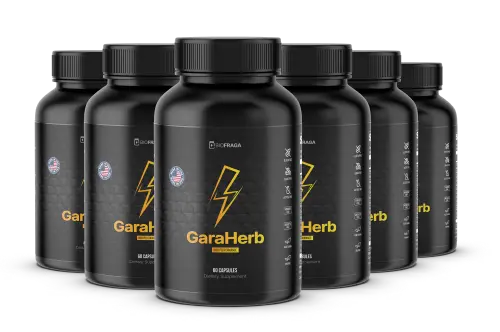
Pine bark and the wider antioxidant picture
Oxidative stress — an imbalance between free radicals and the body’s antioxidant defences — is one of the processes tied to how blood vessels age. Pine bark’s proanthocyanidins are interesting here for two reasons: they scavenge free radicals directly, and research suggests they help recycle other antioxidants such as vitamins C and E back into their active forms. That “network” effect is part of why a modest amount of a concentrated extract can contribute more than its size suggests.
In a men’s daily blend, pine bark plays a supporting, complementary role rather than a starring one. It pairs logically with a nitric-oxide precursor like L-citrulline — one supplies raw material for nitric oxide, the other helps protect it from oxidative breakdown — and with a mineral base like zinc. Keep expectations grounded: antioxidants support the body’s own systems over time; they are not an overnight fix, and a supplement is a complement to a colourful, plant-rich diet, not a replacement for it.
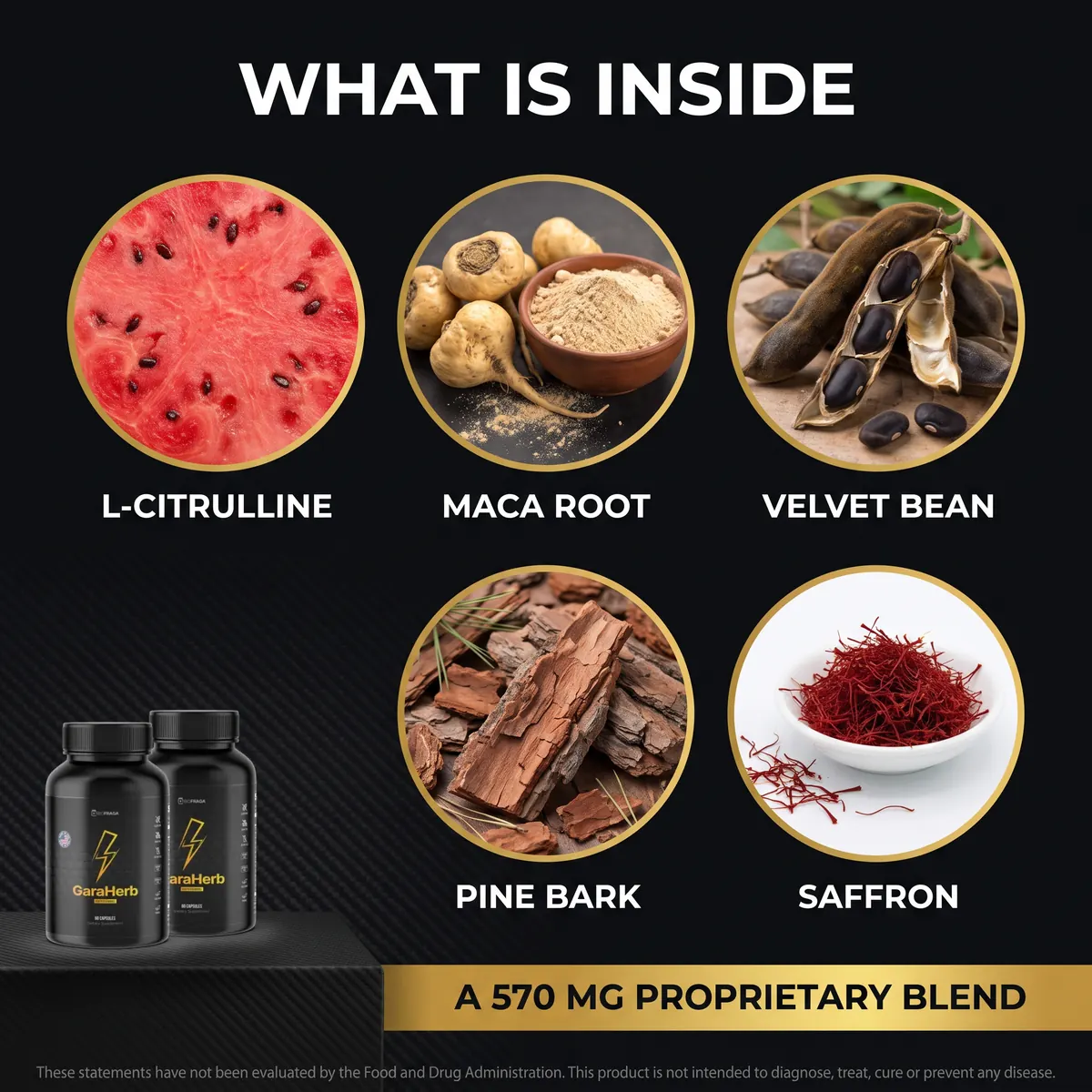
A note on our own product: Pine bark extract is one of the actives listed on the GaraHerb Supplement Facts panel. Because it sits inside a 570 mg proprietary blend, the label does not state its individual milligram amount, and we do not guess at one. The full panel is transcribed on the GaraHerb ingredients page.
Keep reading
- How L-citrulline supports blood flow and nitric oxide
- Zinc and testosterone: how the mineral supports men
- How to support male vitality naturally
- See the full GaraHerb formula and ingredient panel →
Frequently asked questions
What are the main pine bark extract benefits?
Pine bark extract is traditionally used to support healthy circulation, the health of blood-vessel walls, and the body's antioxidant defences. Because healthy blood flow underpins energy and performance, it is a common ingredient in men's vitality blends. It is not a treatment for any condition.
Is pine bark extract the same as Pycnogenol?
Pycnogenol is a specific branded, standardized extract of French maritime pine bark (Pinus pinaster). Generic maritime pine bark extracts come from the same species but may be standardized differently, so always check the species and the proanthocyanidin percentage on the label.
How does pine bark support circulation?
Its proanthocyanidins are potent antioxidants that help protect the endothelium, the lining of blood vessels, and help preserve nitric oxide, the molecule that relaxes and widens vessels. That is why pine bark is often paired with nitric-oxide precursors such as L-citrulline.
How much pine bark extract do studies use?
Research on standardized maritime pine bark extract commonly uses about 50 to 200 mg per day, often split across the day and taken consistently. Within a proprietary blend it contributes at a supporting amount alongside the other actives.
Is pine bark extract safe?
It is generally well tolerated, with mild digestive upset the most common effect. Because it supports the nitric-oxide pathway and may have mild blood-thinning effects, take care if you use anticoagulants or blood-pressure medicine or are due for surgery, and check with your doctor first.
References
- Rohdewald P. “A review of the French maritime pine bark extract (Pycnogenol), a herbal medication with a diverse clinical pharmacology.” International Journal of Clinical Pharmacology and Therapeutics, 2002. pubmed.ncbi.nlm.nih.gov
- Examine.com. “Pycnogenol (maritime pine bark): evidence-based analysis.” examine.com
- National Center for Complementary and Integrative Health. “Antioxidants: In Depth.” nccih.nih.gov
- National Center for Complementary and Integrative Health. “Herbs at a Glance.” nccih.nih.gov
The GaraHerb Research Team is an independent group of men’s-health writers and supplement editors who turn ingredient science and label-reading know-how into plain English. We are not your doctor and we do not sell medical advice — our job is to help you understand how each active works so you can shop and supplement with confidence. Every guide is checked against primary sources such as the NIH Office of Dietary Supplements and peer-reviewed research, and reviewed for accuracy before publishing.
Spotted something that needs correcting? Reach us through our contact page, or read more about who we are.
† These statements have not been evaluated by the Food and Drug Administration. This product is not intended to diagnose, treat, cure or prevent any disease. This article is for general information only and is not medical advice. Speak with your physician before starting any new supplement.