Fenugreek Benefits for Men: How the Saponins Support Testosterone
| What it is | Fenugreek (Trigonella foenum-graecum) is a culinary legume whose seeds are used as a men’s-health botanical. |
| Active compounds | Furostanol saponins (such as protodioscin), the amino acid 4-hydroxyisoleucine, and soluble fibre. |
| How it works | The saponins are thought to influence testosterone-metabolising enzymes so more of your own testosterone stays free and usable — not to add hormone. |
| On a label | Look for a standardized extract (often ~50% saponins); study doses are typically 500–600 mg/day. |
Fenugreek is one of the most-searched names in men’s supplements, and for good reason: few botanicals have been studied as often for free testosterone, libido and training results. But the fenugreek benefits for men are widely misunderstood — it is not a hormone, and it does not work by flooding your body with testosterone. This guide explains the real mechanism in plain language: what fenugreek is, how its saponins are thought to act, the dosing the research actually uses, and how to read a standardized label so you know what you are buying.
None of this is medical advice or a promise to treat a condition. Fenugreek is a food-derived botanical used to support normal, healthy male physiology — general wellness information, nothing more.
What is fenugreek?
Fenugreek is a small annual legume grown across the Mediterranean, the Middle East and South Asia. You have almost certainly tasted it: the seeds give curry powder and imitation maple flavouring their distinctive aroma, and the leaves (methi) are a common vegetable. As a supplement, it is the golden-brown seed — or, more usefully, a concentrated extract of the seed — that matters.
The seed is unusually rich in three things that explain its reputation: furostanol saponins (a family of plant steroids that includes protodioscin), the branched-chain amino acid 4-hydroxyisoleucine, and a large amount of soluble fibre called galactomannan. Each of those does something different, which is why fenugreek shows up in both men’s-vitality and blood-sugar formulas.
Fenugreek benefits for men: how the saponins are thought to work
The headline claim — that fenugreek supports testosterone — rests on its saponins, and the mechanism is more subtle than the marketing suggests. Here is the current thinking, step by step:
- It does not add hormone. Unlike a hormone or a prohormone, fenugreek contains no testosterone. Whatever it does, it works with the testosterone your body already makes.
- It may protect free testosterone. Only a small fraction of your total testosterone is “free” and biologically active; the rest is bound and inactive. Fenugreek saponins are thought to gently influence the enzymes that convert or bind testosterone — notably aromatase (which turns testosterone into oestrogen) and 5-alpha-reductase (which converts it to DHT) — helping more of your own testosterone stay in the free, usable pool.
- It supports libido and training. Several trials in resistance-trained men report improvements in libido, strength and body composition over 8–12 weeks. Whether that traces to the free-testosterone effect, the fibre and blood-sugar effect, or both, is still debated.
In other words, fenugreek is best understood as an efficiency botanical rather than a booster: it aims to help you get more out of the hormone you already produce, in the same family of ideas as how tongkat ali works for testosterone and how boron affects testosterone.
The blood-sugar side of fenugreek
Fenugreek’s second story is metabolic, and it may quietly support the first. The amino acid 4-hydroxyisoleucine is studied for supporting healthy insulin response, while the soluble galactomannan fibre slows the absorption of carbohydrate and can blunt post-meal glucose spikes. Steady blood sugar is not a glamorous benefit, but it underpins energy, body composition and hormonal balance — which is exactly why fenugreek keeps a foot in both the men’s-vitality and the metabolic-health worlds. It is a good reminder that an ingredient rarely does just one thing.
Want botanicals like these paired in one clean, once-daily capsule?
See GaraHerb PackagesDosing context: what the research uses
For general education, standardized fenugreek extracts are most often studied at about 500–600 mg per day, typically standardized to around 50% saponins (branded extracts such as Testofen and Furosap are the usual research materials). Whole ground seed is used at much higher amounts — several grams — because it is far less concentrated. Effects on libido, strength and free testosterone are reported over 6–12 weeks of daily use, not overnight. In a multi-ingredient men’s blend, fenugreek is one contributor among several complementary actives, so the goal is combined support rather than a mega-dose of any single herb. Always follow the amount on the label you buy, and remember that with saponins, more is not automatically better.
What to look for on a label
- Standardization. The single most important line. A quality product tells you the saponin percentage (often ~50%) or names a branded, standardized extract. “Fenugreek seed powder” with no percentage could be almost anything.
- A stated amount. Look for the extract weight in milligrams. In a proprietary blend the total blend weight is shown instead of each part — convenient, but it means you are trusting the formulator’s ratios.
- Sensible company. Fenugreek sits naturally beside other free-testosterone and vitality actives — zinc, boron and tongkat ali among them — so a thoughtfully built men’s blend is a reasonable home for it.
- Clean manufacturing. Choose products made in an FDA-registered, GMP-certified facility, with allergen status stated — important, since fenugreek is a legume.
Who tends to use fenugreek — and simple safety
Fenugreek appeals to two overlapping groups: men focused on strength training and libido, and men managing everyday blood-sugar and energy. It is generally well tolerated. The most talked-about quirk is harmless — a maple-syrup smell in sweat or urine, caused by an aroma compound called sotolon. Some people notice mild digestive upset at first.
A few real cautions matter. Because fenugreek is a legume, it can cross-react with chickpea or peanut allergies. Because it can lower blood sugar and has mild blood-thinning potential, anyone taking diabetes medication, blood thinners, or preparing for surgery should talk to a doctor first. As always, do not exceed the labelled dose, and treat fenugreek as one supporting piece rather than a stand-alone fix.
To put fenugreek in context with the other pillars of men’s hormonal health, read our guides on zinc and testosterone and magnesium benefits for men — the two minerals most likely to be quietly limiting your results.
One capsule a day, gluten-free and vegetarian, with a 60-day money-back guarantee.
Get GaraHerb Today
Fenugreek in the bigger picture
It is easy to treat any single ingredient as a switch, but fenugreek is a good example of why that framing fails. Its likely value comes from nudging several systems at once — free-testosterone availability, blood-sugar stability, and possibly training recovery — each by a modest amount. Modest, stacked, consistent nudges are how botanicals earn their keep, and they only show up on top of the fundamentals. No saponin will out-run poor sleep, no training, or a diet built on ultra-processed food.
That is also why fenugreek so often appears inside a blend rather than alone. Paired with a zinc that supports normal testosterone, a magnesium that supports sleep and free testosterone, and circulation actives that keep blood flowing where it is needed, its efficiency angle complements the others. Think of it as one instrument in a section, not a soloist — useful, evidence-backed, but at its best in good company.
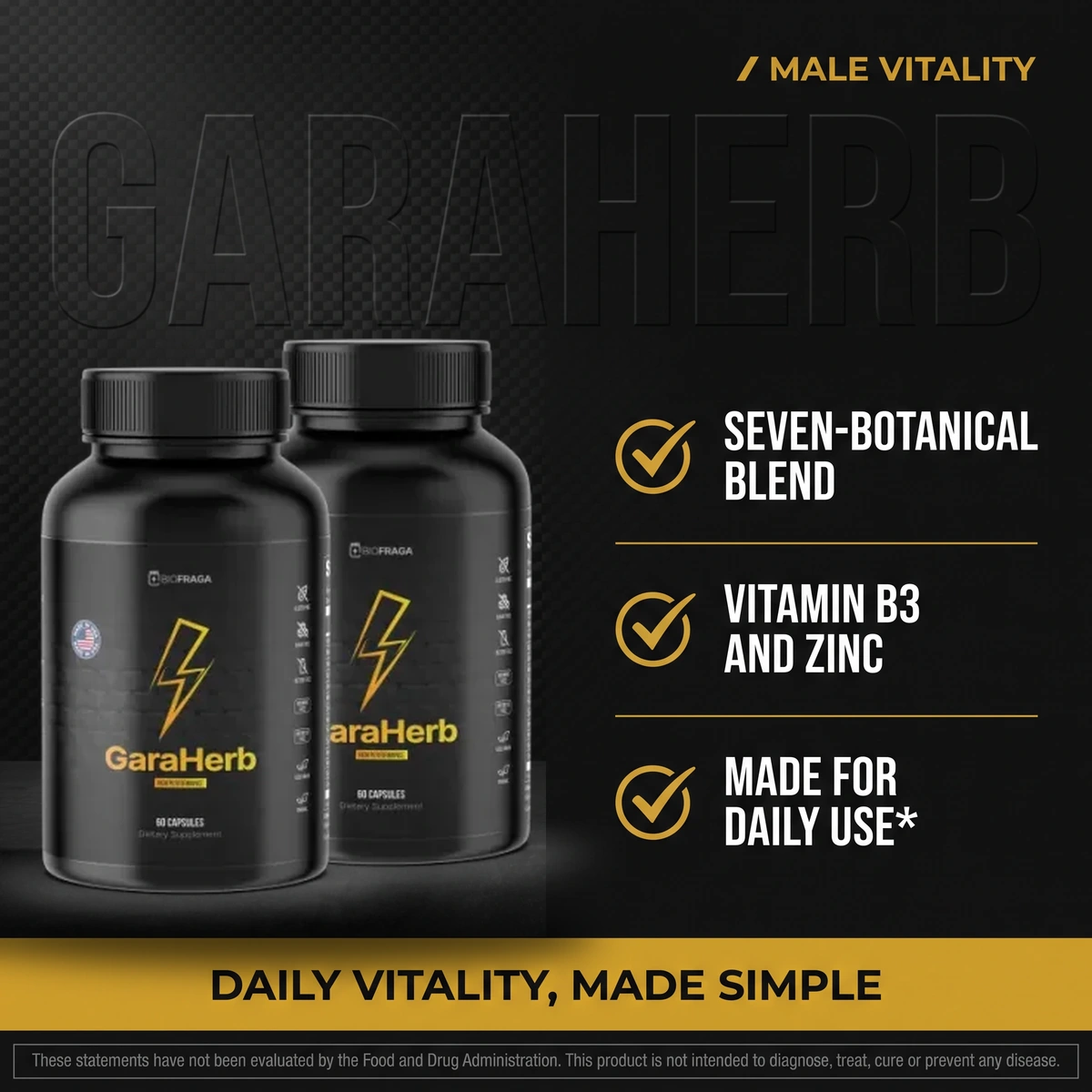
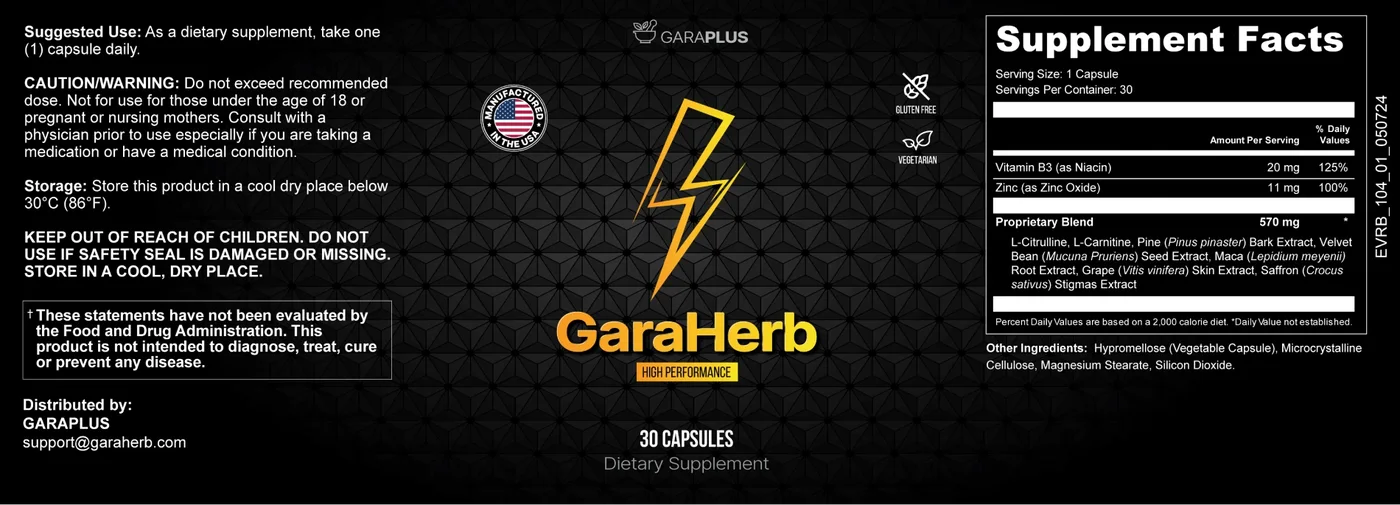
A note on our own product: Fenugreek is not an ingredient in GaraHerb. This guide is general ingredient education. The GaraHerb Supplement Facts panel lists Vitamin B3, Zinc and a 570 mg blend of L-Citrulline, L-Carnitine, Pine bark, Velvet bean, Maca root, Grape skin and Saffron — you can read the full panel on the GaraHerb ingredients page.
Keep reading
- How does tongkat ali work for testosterone?
- Boron and testosterone: how the trace mineral works
- Magnesium benefits for men: testosterone, sleep and muscle
- See the full GaraHerb formula and ingredient panel →
Frequently asked questions
What are the main fenugreek benefits for men?
Fenugreek is used to support healthy free testosterone, libido and strength-training results, and to help with normal blood-sugar handling. The effects are attributed mainly to its furostanol saponins. It is a botanical used for general wellness support, not a treatment for any medical condition.
How does fenugreek support testosterone?
Fenugreek does not add hormone. Its saponins are thought to gently influence the enzymes that break testosterone down or convert it, such as aromatase and 5-alpha-reductase, which may help more of your own testosterone stay in its active, free form rather than raising total production.
How much fenugreek do studies use?
Standardized fenugreek extracts are commonly studied at about 500 to 600 mg per day, often standardized to roughly 50 percent saponins. Whole seed powder is used at higher gram amounts. In a men’s blend fenugreek is one contributor among several, so follow the amount printed on the label you buy.
Does fenugreek have side effects?
For healthy adults fenugreek is generally well tolerated. Some people notice a maple-syrup smell in sweat or urine, or mild digestive upset. Because it is a legume it can cross-react with chickpea or peanut allergies, and it may lower blood sugar, so anyone on diabetes or blood-thinning medicine should speak with a doctor first.
How long does fenugreek take to work?
Most fenugreek studies run for six to twelve weeks, so it is best judged over one to three months of consistent daily use alongside sleep, resistance training and a whole-food diet rather than from a single dose.
References
- National Institutes of Health, Office of Dietary Supplements. “Dietary Supplements for Exercise and Athletic Performance.” ods.od.nih.gov
- Examine.com. “Fenugreek: evidence-based analysis.” examine.com
- National Center for Complementary and Integrative Health. “Fenugreek.” nccih.nih.gov
- MedlinePlus, U.S. National Library of Medicine. “Fenugreek.” medlineplus.gov
The GaraHerb Research Team is an independent group of men’s-health writers and supplement editors who turn ingredient science and label-reading know-how into plain English. We are not your doctor and we do not sell medical advice — our job is to help you understand how each active works so you can shop and supplement with confidence. Every guide is checked against primary sources such as the NIH Office of Dietary Supplements and peer-reviewed research, and reviewed for accuracy before publishing.
Spotted something that needs correcting? Reach us through our contact page, or read more about who we are.
† These statements have not been evaluated by the Food and Drug Administration. This product is not intended to diagnose, treat, cure or prevent any disease. This article is for general information only and is not medical advice. Speak with your physician before starting any new supplement.